Al Skin and Hair Analyzer | AI Skin & Scalp Analysis
Al Skin and Hair Analyzer: AI-Powered Skin & Scalp Analysis System
Explore the Al Skin and Hair Analyzer with 9-spectral imaging, AI facial skin analysis, scalp assessment, visual reports, and customer management tools.
9-Spectral Imaging | AI Skin Analysis | Scalp Health Assessment | Personalized Beauty Management
The Al Skin and Hair Analyzer is an intelligent skin and scalp analysis system designed for beauty salons, medical spas, skincare clinics, and professional aesthetic centers. Combining multispectral imaging, AI-assisted image analysis, and cloud-based data management, it helps practitioners examine visible skin characteristics, identify areas that may need attention, and present personalized skincare recommendations.
From facial skin texture and pigmentation patterns to scalp oiliness and hair density, the system brings multiple analysis functions into one platform. Its high-resolution imaging, visual comparison tools, and customer management features also help beauty businesses explain treatment plans more clearly and track changes across follow-up visits.
For businesses looking to make skincare consultations more visual, consistent, and data-informed, the Al Skin and Hair Analyzer offers a practical way to connect skin assessment with ongoing beauty management services.
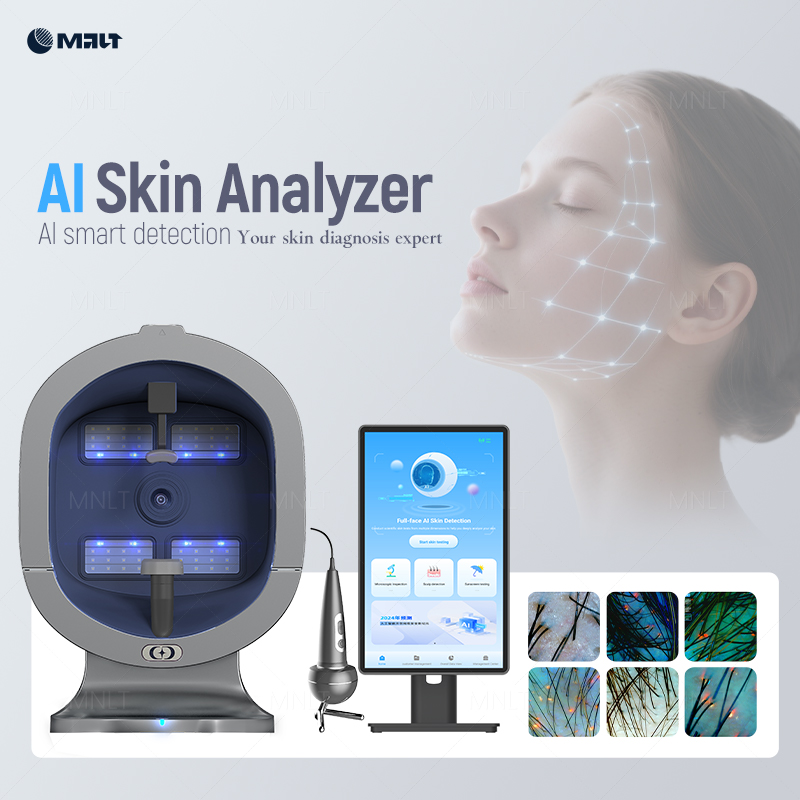
More Than a Skin Scanner: A Complete Skin & Scalp Analysis Platform
A skincare consultation often starts with questions that are difficult to answer through a basic visual examination alone. Where are the areas of uneven pigmentation? Is surface oiliness concentrated in particular zones? How does the appearance of pores, redness, or fine lines change over time?
The Al Skin and Hair Analyzer uses multispectral images and AI-assisted analysis to help make these observations easier to communicate.
Key Features at a Glance
- 9-spectral imaging technology for examining different visible and subsurface skin characteristics.
- AI-assisted facial skin analysis with visual reports and comparative images.
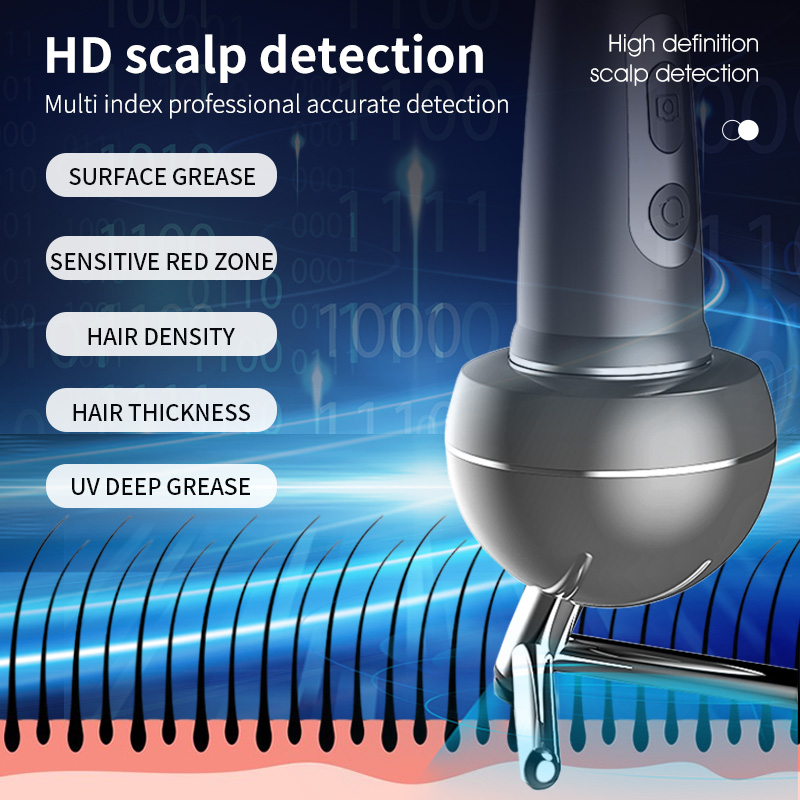
- Scalp analysis covering surface oiliness, sensitivity-related areas, hair density, and hair thickness.
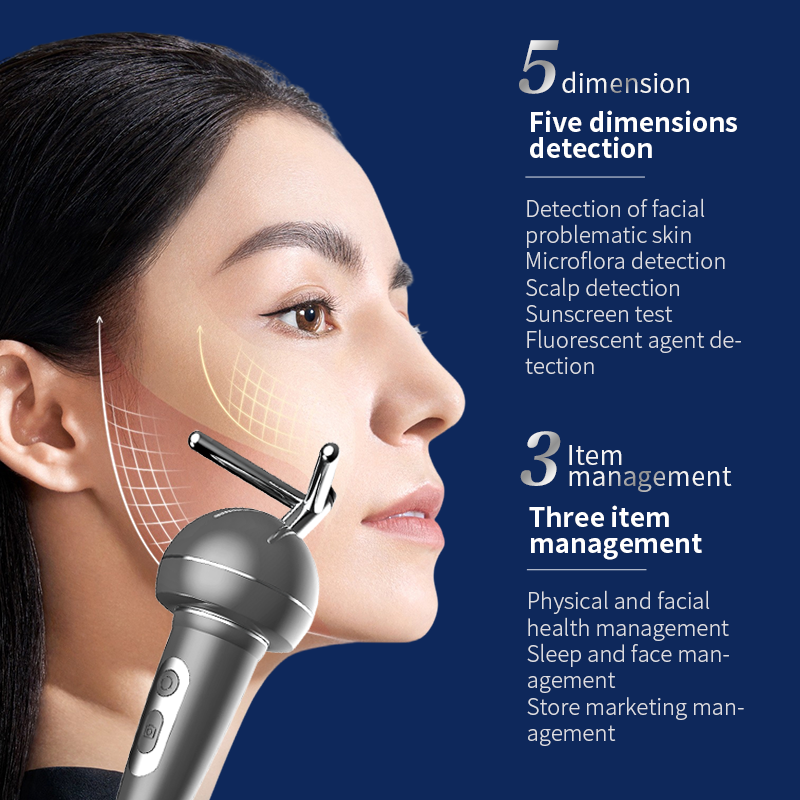
- Five-dimensional detection functions covering facial skin concerns, microflora, scalp, sunscreen testing, and fluorescent-agent detection.
- High-resolution imaging tools for close-up examination, 3D views, and image comparisons.
- Cloud-based data analysis for storing and reviewing customer assessment information.
- Skin management reports to support personalized skincare consultations.
- Customer and store management features for tracking cases and organizing beauty services.
The system is designed to support cosmetic assessment and customer communication. Its results should not be treated as a medical diagnosis.
9-Spectral Imaging: See Skin Details from Different Angles
Different imaging modes reveal different visual characteristics. Rather than relying on a single photograph, the Al Skin and Hair Analyzer combines multiple lighting and image-processing approaches to provide a more detailed view of the skin.
Key Imaging Modes
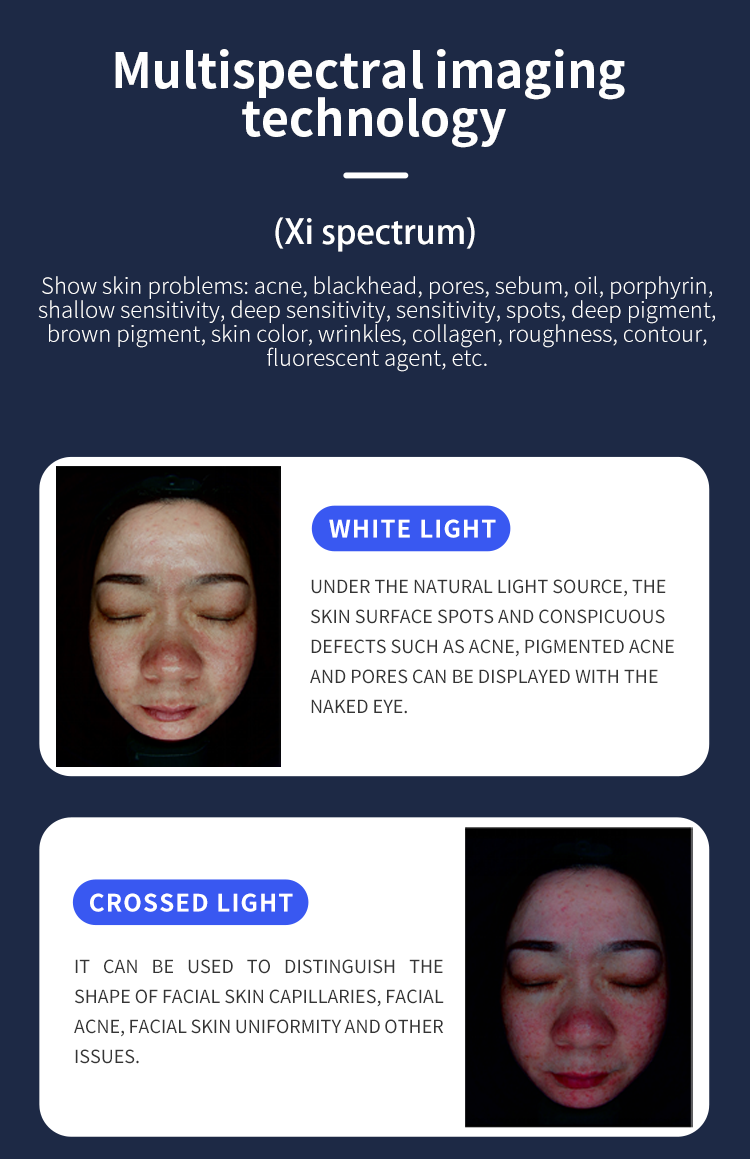
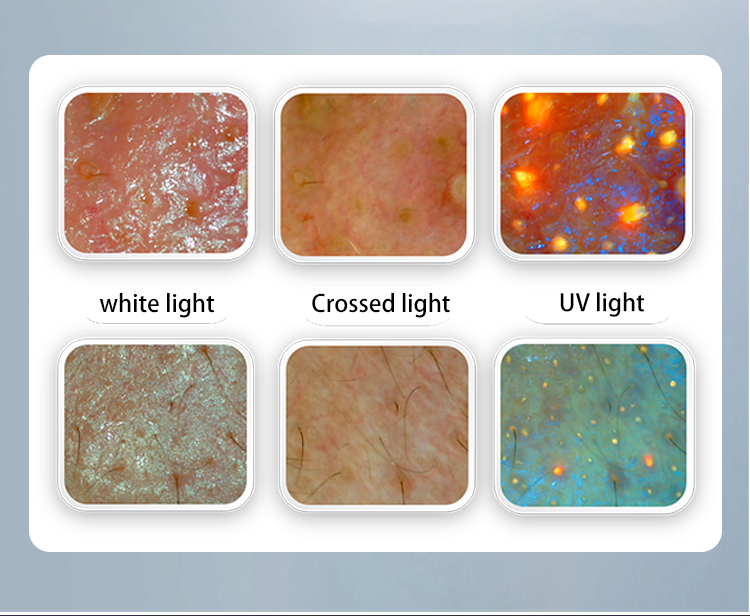
White Light
Provides a natural-light view of the skin surface, helping users examine visible blemishes, acne-like lesions, pores, and uneven pigmentation.
Cross-Polarized Light
Helps reveal facial redness, visible vascular patterns, and variations in skin appearance that may be less obvious under ordinary lighting.
Directional Light
Highlights surface texture and fine details, supporting the examination of roughness, fine lines, wrinkles, and uneven skin contours.
UV Light
Provides additional visual information about selected pigmentation patterns, pore-related concerns, and fluorescence characteristics.
Wu's Light
The supplied product information describes this mode as supporting the visualization of deeper pigmentation patterns through enhanced image contrast.
Composite UV Light
Combines fluorescence-based imaging to help visualize patterns associated with surface oil, porphyrin-related signals, and pigment distribution.
The platform also includes RBX-style red and brown image analysis and pigment distribution maps to help organize visual findings.
These modes complement one another, but imaging results depend on acquisition conditions, image processing, and individual skin characteristics. They do not independently establish a medical diagnosis.
AI Skin Analysis: A More Detailed View of Facial Skin
The AI Skin Analyzer is designed to examine a broad range of facial skin indicators and present them in a structured visual report.
Facial Skin Indicators
| Analysis Category | Examples of Visual Indicators |
|---|---|
| Acne and pores | Acne-like blemishes, blackheads, enlarged pores |
| Oil and sebum | Surface oiliness, sebum-related patterns |
| Redness and sensitivity | Visible redness and sensitivity-related areas |
| Pigmentation | Surface spots, brown pigmentation, deeper pigment patterns |
| Texture and aging | Fine lines, wrinkles, roughness, uneven texture |
| Skin appearance | Overall tone, contour, and visible irregularities |
| Fluorescence | Fluorescent-agent-related patterns |
| Collagen-related analysis | Image-based patterns intended to illustrate collagen-related texture changes |
The system can organize these findings into visual maps, making it easier to discuss individual skin concerns and explain why particular areas may receive additional attention during a skincare consultation.
Sensitive Skin Heatmap
The system uses image processing to display the distribution of redness-related signals and other visual indicators associated with sensitivity or inflammation.
The supplied interface describes a color-based scale:
- Blue: Normal reference range.
- Green: Mild indication.
- Yellow: Early warning.
- Red: More pronounced indication.
This is a software visualization system, not a standalone clinical severity scale. Practitioners should interpret the display alongside a visual assessment and the customer's reported experience.
Pigment Distribution Maps
Brown-image analysis and pigment mapping help visualize the location, distribution, and relative appearance of pigmentation patterns across the face.
These reports can support discussions about uneven skin tone, visible spots, and skincare routines. They may also help customers compare photographs taken at different visits under comparable conditions.
Microscopic Skin Inspection: Focus on the Details
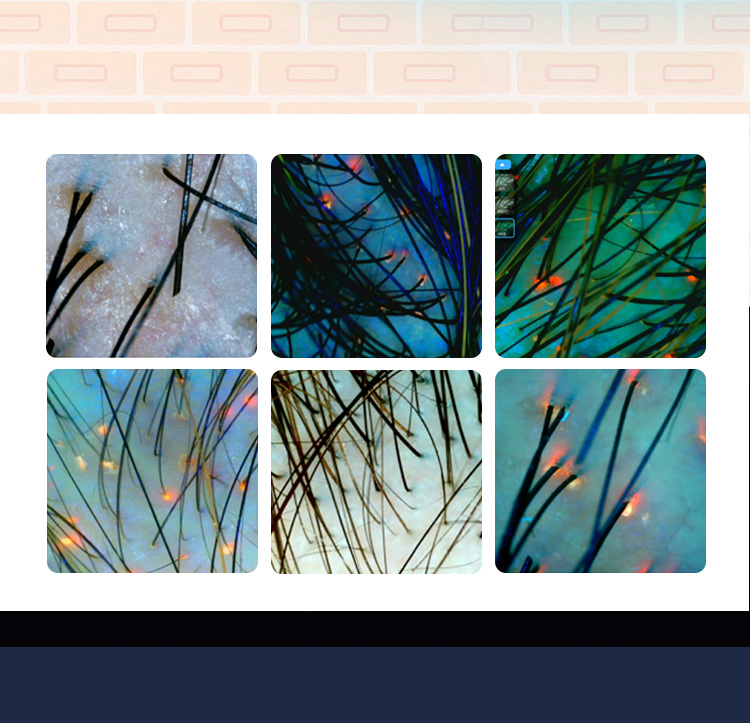
Close-up imaging helps practitioners examine selected skin areas that may be difficult to evaluate clearly in a full-face image.
The system provides visual information related to:
- Small blemishes and localized redness.
- Pigmentation irregularities.
- Early-visible discoloration patterns.
- Visible microvascular patterns.
- Pore congestion and follicular areas.
- Surface texture and unevenness.
By switching imaging modes and enlarging a selected region, the operator can show customers the difference between the full-face view and a closer examination of a specific concern.
These images are intended to support cosmetic skin assessment. Suspected skin disease or persistent inflammation should be assessed by an appropriately qualified healthcare professional.
Professional Scalp Analysis
Facial skincare is only part of a complete beauty consultation. The Al Skin and Hair Analyzer also includes scalp imaging to help assess selected scalp and hair characteristics.
Five Scalp Indicators
| Scalp Indicator | What the System Helps Visualize |
|---|---|
| Surface Grease | Visible oiliness on the scalp |
| Sensitive Red Zone | Areas showing redness-related imaging patterns |
| Hair Density | Visible hair distribution in the captured area |
| Hair Thickness | Apparent hair shaft thickness in suitable images |
| UV Deep Grease | Fluorescence-related patterns associated with oil and scalp conditions |
This information can support consultations about scalp cleansing, hair-care routines, and appropriate cosmetic products.
Hair density and thickness estimates depend on image quality, the selected scalp area, and the analysis method. They should be used as assessment references rather than definitive measurements of hair growth or hair-loss conditions.
Why Include Scalp Analysis?
Offering facial and scalp analysis on the same platform can help beauty businesses expand their consultation services without maintaining separate imaging systems for every assessment.
Potential applications include scalp-care consultations, cosmetic hair-care recommendations, and progress documentation during follow-up appointments.
Five-Dimensional Detection for More Comprehensive Consultations
The system organizes its main detection functions into five areas.
1. Facial Skin Analysis
Examines visible facial skin characteristics, including pores, pigmentation, texture, redness-related patterns, and oiliness.
2. Microflora-Related Imaging
Uses fluorescence-related image information to help visualize selected surface patterns associated with skin microflora.
3. Scalp Analysis
Provides views of scalp oiliness, redness-related areas, hair density, and apparent hair thickness.
4. Sunscreen Testing
Supports visual demonstrations of sunscreen coverage under compatible imaging conditions.
5. Fluorescent-Agent Detection
Helps visualize fluorescence-related patterns for educational and cosmetic assessment purposes.
Together, these functions make the Al Skin and Hair Analyzer suitable for businesses that want to provide more detailed visual consultations rather than relying entirely on a standard photograph or manual observation.
AI Image Analysis and Report Generation
Capturing an image is only the first step. The system also supports image processing, report presentation, and case comparison to help transform observations into useful consultation information.
Comprehensive Skin Reports
A report can bring multiple images and analysis views together so the practitioner and customer can review relevant skin characteristics in one place.
Before-and-After Comparison
Images from different visits can be compared to help visualize changes in the appearance of selected skin areas.
For meaningful comparisons, photographs should be captured under similar lighting, positioning, and preparation conditions.
Localized Image Enlargement
Operators can enlarge a specific region to help customers see pores, pigmentation patterns, or surface texture more clearly.
Three-Dimensional Views
The supplied system description includes 3D capture options, multi-angle viewing, localized magnification, and 3D simulation slices. These functions are intended to make image interpretation more visual and interactive.
Three-dimensional rendering is a visualization tool; it should not be interpreted as a direct measurement of every underlying skin structure.
AI Intelligence and Cloud-Based Skin Management
The Al Skin and Hair Analyzer combines image acquisition with AI-assisted processing and cloud-based quantitative analysis of selected indicators.
Customer Data Management
The platform supports records such as:
- Customer profiles and age statistics.
- Skin assessment and skincare records.
- Images from different visits.
- Symptom-related assessment categories.
- Comparative analysis across follow-up appointments.
This makes it easier for a beauty business to keep consultation records organized and review changes over time.
Sleep and Facial Wellness Management
The supplied software functions include a sleep-and-face management module that allows sleep-related records to be reviewed alongside selected facial indicators.
This can support wellness conversations, but facial images alone cannot establish sleep quality or diagnose a sleep disorder.
Weight and Facial Management
A separate management module displays weight and BMI-related information alongside facial indicators. These records can be used as general wellness references where appropriate.
BMI is a screening measure rather than a direct measurement of body fat or a complete assessment of health.
From Skin Assessment to Personalized Product Recommendations
A detailed consultation becomes more useful when the findings are clearly explained and connected to an appropriate skincare plan.
The platform includes store marketing management functions that can organize product recommendations around different skin concerns.
How This Helps Beauty Businesses
More Visual Consultations
Customers can see their facial images and selected analysis maps during a discussion.
Personalized Skincare Recommendations
Staff can organize product suggestions according to the customer's observed skin characteristics and routine.
Follow-Up Management
Stored images and records help practitioners review changes during later visits.
Customer Education
Enlarged images and comparative reports can help explain skincare priorities without relying only on technical terminology.
Product recommendations should reflect the customer's needs, product directions, and relevant professional guidance rather than being determined solely by an automated analysis result.
Designed for a Professional Treatment Environment
The device combines a refined appearance with practical positioning and adjustment features.
Product Design Details
- Metal-texture exterior design.
- Adjustable chin rest to support front, left, and right facial image capture.
- Adjustable bracket height to accommodate different viewing positions.
- Hidden shading design intended to balance appearance and practicality.
- High-resolution imaging configuration for detailed facial and scalp assessment.
The adjustable chin rest and bracket can help operators maintain consistent positioning, which is important when comparing images from different sessions.
Technical Overview
| Feature | Description |
|---|---|
| Product Name | Al Skin and Hair Analyzer |
| Main Technology | AI-assisted image analysis |
| Imaging System | 9-spectral imaging |
| Facial Analysis | Skin texture, pores, pigmentation, oiliness, redness-related patterns, and other visual indicators |
| Scalp Analysis | Surface grease, sensitive red zones, hair density, hair thickness, and UV-related oil patterns |
| Detection Functions | Facial skin, microflora-related imaging, scalp, sunscreen testing, and fluorescent-agent detection |
| Imaging Modes | White, cross-polarized, directional, UV, Wu's light, composite UV, and processed image-analysis views |
| Image Tools | High-resolution images, localized enlargement, multi-angle views, and 3D visualization features |
| Reporting | Comprehensive analysis reports and comparative images |
| Data Management | Cloud-based analysis and customer records |
| Business Features | Customer statistics, follow-up comparisons, and product recommendation management |
| Positioning Features | Adjustable chin rest and height-adjustable bracket |
The exact hardware configuration, software version, cloud service availability, supported languages, and report options should be confirmed for the selected model.

Who Can Benefit from an AI Skin and Hair Analyzer?
Beauty Salons and Skincare Studios
Use image-based consultations to explain skin concerns and help customers understand personalized skincare plans.
Medical Spas and Aesthetic Clinics
Add structured skin imaging to aesthetic consultations, treatment planning, and follow-up documentation where appropriate.
Scalp and Hair-Care Centers
Provide visual scalp assessments and support cosmetic hair-care consultations.
Skincare Brands and Distributors
Use facial image analysis for customer education, product consultation, and structured beauty-service experiences.
Professional Beauty Equipment Distributors
Offer a platform that combines facial imaging, scalp assessment, report generation, and customer management.
The system's suitability depends on the business model, software requirements, and applicable regulatory framework. It should not be marketed as a substitute for clinical examination or medical diagnostic equipment unless the specific model has the required authorization.
Why Choose Shandong Moonlight Electronic Technology Co., Ltd.?
Based in Weifang, China, Shandong Moonlight Electronic Technology Co., Ltd. has 18 years of experience in the research, development, production, sales, and service of professional beauty equipment.
The company works with international beauty businesses and distributors seeking equipment solutions and customization options for their markets.
Manufacturing and Business Support
- International-standard dust-free production facilities.
- OEM and ODM customization options.
- Free logo design for private-label projects.
- Relevant quality and regulatory documentation for applicable products and markets.
- Two-year warranty, subject to agreed terms.
- 24-hour after-sales support.
For distributors and beauty brands, customization requirements, interface options, software configuration, and product documentation can be discussed before ordering.
Learn more about MNLT's company and capabilities or contact our team for product specifications and an OEM/ODM quotation.


Frequently Asked Questions
1. What Is an Al Skin and Hair Analyzer?
An Al Skin and Hair Analyzer is an AI-assisted imaging system designed to examine selected facial skin and scalp characteristics. It uses multispectral imaging and image analysis to produce visual reports for cosmetic consultations and beauty management.
2. What Is the Purpose of 9-Spectral Imaging?
Different imaging modes reveal different visual characteristics. They can help practitioners examine visible texture, pigmentation patterns, redness-related signals, oiliness, and fluorescence-related patterns under different lighting conditions.
3. Can the System Analyze Both Skin and Scalp?
Yes. It includes facial skin analysis and scalp assessment functions, including surface grease, sensitive red zones, hair density, hair thickness, and UV-related oil patterns.
4. Can It Track Skin Changes Over Time?
Yes. The software supports image storage and comparative analysis, allowing operators to review photographs and selected indicators across different visits.
5. Does the Analyzer Recommend Skincare Products?
The platform includes product recommendation and store marketing management functions. These can help organize recommendations according to selected skin concerns, but professional judgment and individual product suitability remain important.
6. Can It Diagnose Skin Diseases or Hair-Loss Conditions?
The system is intended to support cosmetic skin and scalp assessment. Its images and AI outputs should not be treated as a standalone medical diagnosis. Suspected skin disease, scalp disorders, or significant hair loss should be evaluated by a qualified healthcare professional.
7. Is This Equipment Suitable for Beauty Salons and Medical Spas?
It may be suitable for businesses that provide skincare consultations, aesthetic services, or scalp-care services. Buyers should confirm that the selected model, its software, and its permitted claims comply with the regulations of the target market.
8. Does MNLT Offer OEM and ODM Services?
Yes. Shandong Moonlight Electronic Technology Co., Ltd. offers OEM and ODM customization, including free logo design. Product configuration, software options, documentation, and branding requirements can be discussed before ordering.
Request a Quote for the Al Skin and Hair Analyzer
Make skin consultations more visual, bring facial and scalp analysis into one platform, and organize customer follow-ups with AI-assisted imaging and report management.
Contact Shandong Moonlight Electronic Technology Co., Ltd. to request product specifications, confirm software features, discuss OEM/ODM options, and obtain a quotation for your market.