

Microneedling has evolved significantly from the manually operated roller devices that first introduced controlled skin puncturing to the beauty and aesthetic market. Today, professional providers are increasingly looking for systems that offer greater control over needle movement, penetration depth, consistency, hygiene, and day-to-day usability.
This shift has brought renewed attention to Dermapen 4, a digital microneedling platform built around high-speed vertical puncture technology, adjustable needle depth, disposable needle cartridges, and an integrated safety management system.
For aesthetic clinics, skin-care centers, medical spas, and equipment distributors, the appeal of Dermapen 4 is not simply that it creates microchannels in the skin. Its value lies in how precisely those micro-injuries can be generated and how the technology can be incorporated into a professional skin-rejuvenation workflow.
Microneedling itself has been studied extensively, particularly for improving the appearance of acne scars, with systematic reviews reporting improvement in scar appearance while also noting that outcomes vary among techniques and treatment approaches.
What Is Dermapen 4?
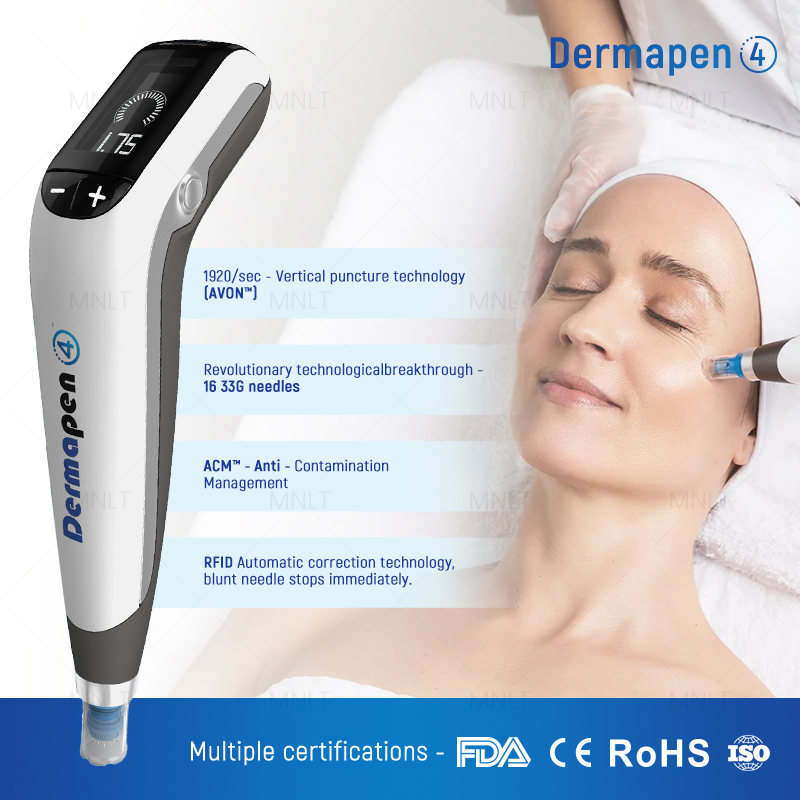
Dermapen 4 is a motorized microneedling device designed around vertical needle penetration rather than the dragging motion associated with traditional roller systems.
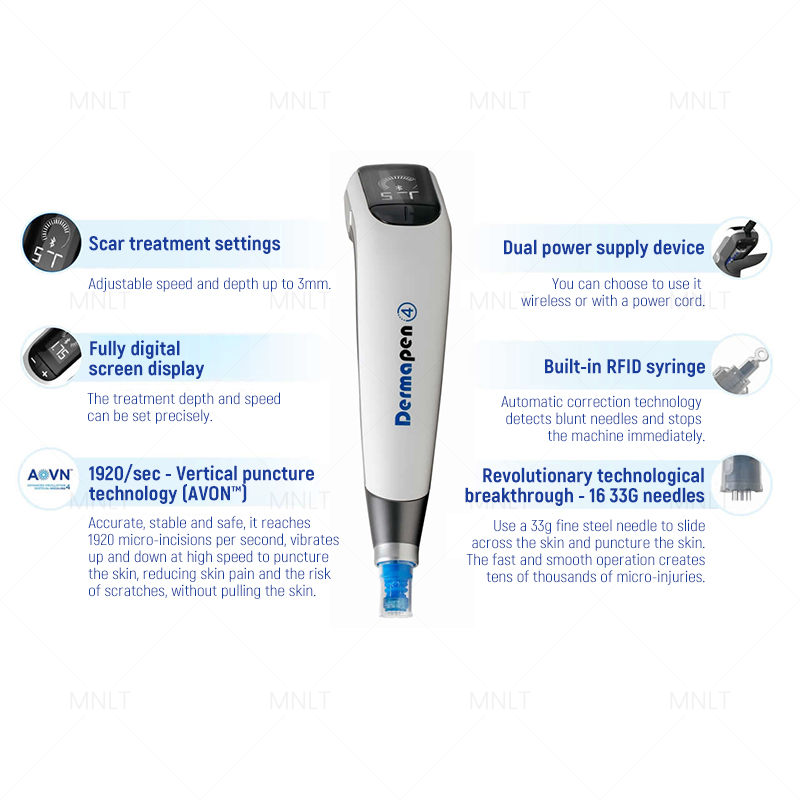
Its core technology, AVON™ Vertical Puncture Technology, drives a fine needle array vertically into and out of the skin at high speed. According to the product specification, the device can perform up to 1,920 vertical needle punctures per second.
The purpose of this architecture is to create a large number of evenly distributed micro-punctures while minimizing the dragging and lateral movement associated with conventional rollers.
For professional users, this distinction is important.
A rolling device moves across the skin while the needle contacts can occur at an angle. A vertical pen-style system is designed to make each puncture more controlled and perpendicular to the treatment surface.
That engineering approach provides a foundation for precise microneedling across different facial and body areas.
Vertical Puncture Technology: Why The Needle Movement Matters
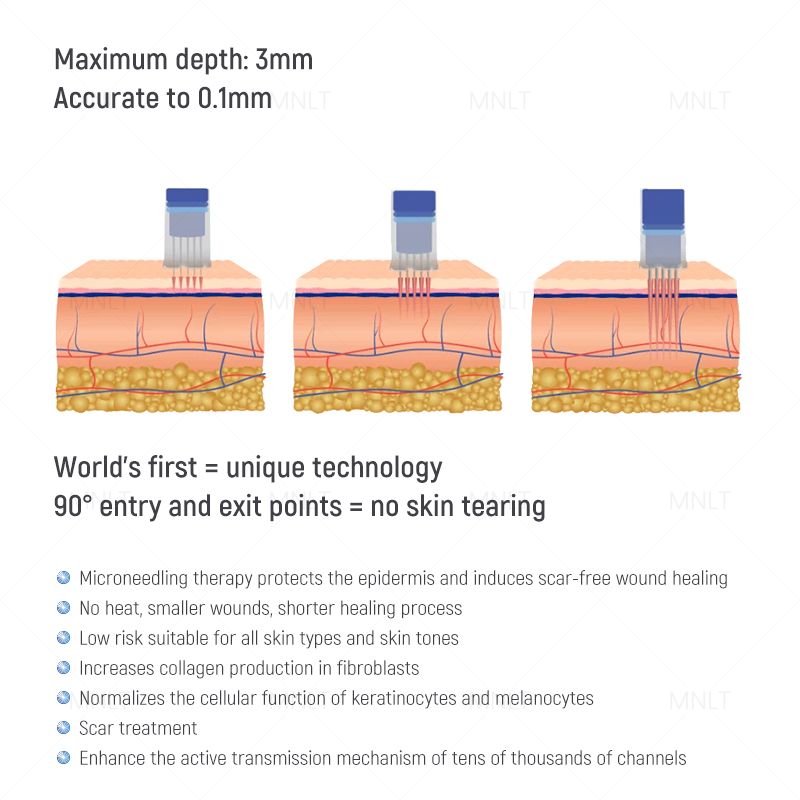
The major technical difference between Dermapen 4 and conventional roller-style microneedling is the direction in which the needles enter the skin.
With vertical microneedling, the needles are designed to enter and exit at approximately 90-degree angles. The device does not need to be dragged repeatedly across the skin to create microchannels.
This can help provide a more uniform puncture pattern and reduce the mechanical pulling associated with rolling systems.
The result is a controlled microneedling process designed to create microscopic channels while maintaining a high level of precision.
This matters especially for professional skin areas where consistency is important, including:
- Facial skin
- Jawline and neck
- Acne-scarred areas
- Uneven skin texture
- Enlarged-looking pores
- Stretch marks
- Selected body areas
The FDA notes that microneedling devices can penetrate living layers of skin and may affect nerves, blood vessels, and other structures, which is why professional training and appropriate patient selection are important.
1,920 Vertical Punctures Per Second
Speed is one of the most recognizable specifications of Dermapen 4.
The device can perform up to 1,920 vertical needle punctures per second, creating a dense pattern of controlled microchannels across the treatment area.
High-speed needle movement is not simply a marketing number. In practical terms, a faster vertical mechanism can help the operator cover the selected area efficiently while maintaining consistent movement.
This is especially relevant in commercial clinics where appointment efficiency matters.
Compared with slower manual systems, a high-speed automated platform can potentially make professional workflows more predictable, although actual treatment time depends on treatment area, technique, operator experience, and protocol.
16 Fine 33G Needles For Controlled Microneedling
Another defining feature is the 16-needle 33G cartridge configuration.
Using fine-gauge needles allows the system to create multiple small puncture points across the skin during each movement of the cartridge.
The multi-needle configuration is designed to distribute the punctures across the treatment area rather than relying on a single needle point.
Dermapen 4 also uses replaceable heads designed for straightforward installation. The cartridge connection incorporates three locking points intended to help keep the disposable head securely positioned during use.
For professional facilities, disposable needle cartridges are particularly important from a hygiene and infection-control perspective. The FDA advises healthcare providers to use a new microneedle cartridge for each patient and treatment session rather than reusing cartridges.
ACM™ Anti-Contamination Management
Professional microneedling is not only about penetration depth and speed. Cartridge management and contamination control are equally important.
Dermapen 4 incorporates ACM™ Anti-Contamination Management as part of its cartridge system.
The design is intended to support a more controlled treatment environment by using dedicated replaceable needle heads and a built-in management system.
For aesthetic clinics, this type of design can support standardized hygiene procedures and simplify cartridge replacement between treatments.
The broader point is worth emphasizing: because microneedling intentionally creates openings in the skin, infection prevention and correct device handling are fundamental parts of professional practice. The FDA specifically highlights cleaning, disinfection, cartridge replacement, and staff training as important safety considerations.
RFID Automatic Correction And Needle Safety
One of the more distinctive features of Dermapen 4 is its integrated RFID automatic correction technology.
The built-in RFID cartridge system is designed to recognize the needle cartridge and monitor its condition. According to the product design, when a blunt or worn needle is detected, the system is programmed to stop automatically.
This creates an additional layer of operational control.
Instead of relying entirely on visual inspection, the device integrates cartridge recognition and automatic stopping into the system architecture.
For busy professional environments, this kind of automated safety logic can help standardize equipment handling and reduce reliance on manual checks alone.
Fully Digital Depth And Speed Control
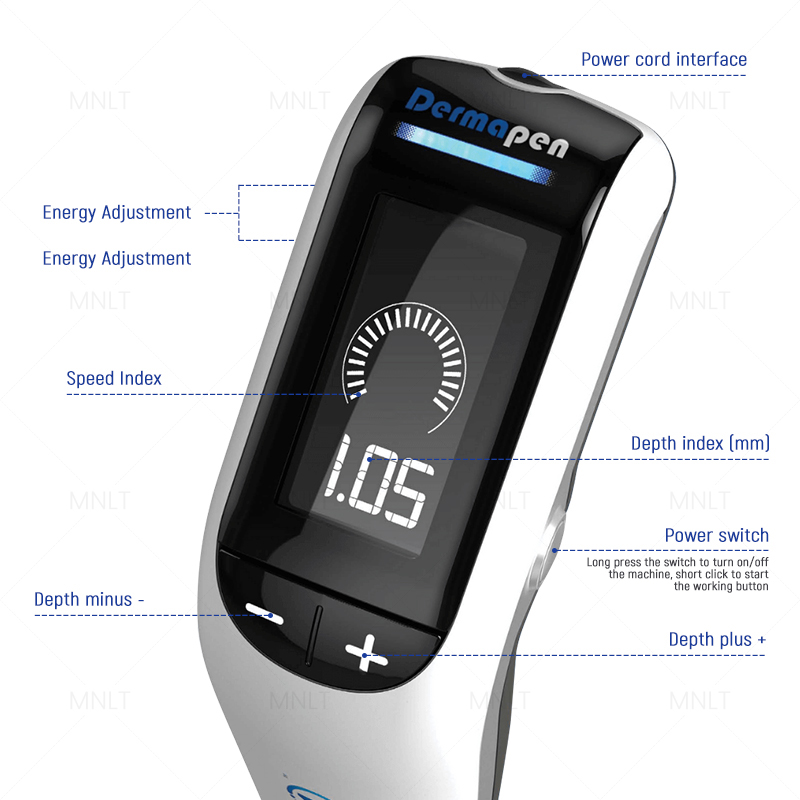
Dermapen 4 replaces mechanical guesswork with a digital interface.
The system allows the operator to view and adjust:
The specified penetration depth can be digitally adjusted from approximately 0.1 mm to 3.0 mm, with adjustment accuracy down to 0.1 mm.
This level of digital control is particularly relevant when the same device is being used for different skin areas or different aesthetic objectives.
Rather than treating every area in the same way, professional users can select settings according to the intended protocol, treatment area, and patient assessment.
The ability to control depth digitally also creates a clearer relationship between the device display and the treatment plan.
Skin Remodeling Through Controlled Micro-Injury
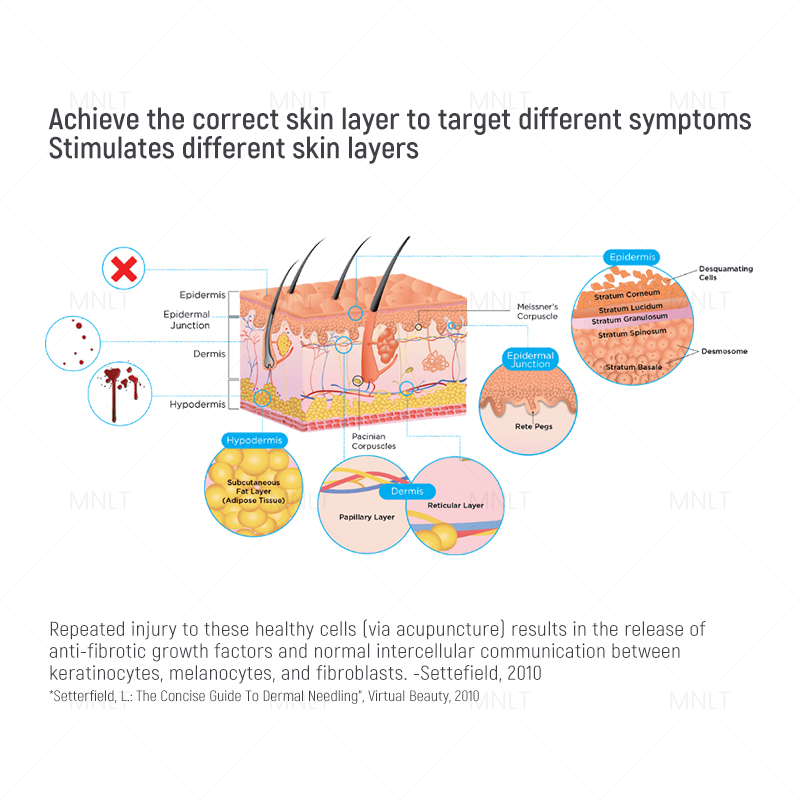
The concept behind microneedling is based on controlled micro-injury.
The creation of tiny punctures can initiate a wound-healing response involving cellular signaling and tissue remodeling. Collagen-related processes and changes in the extracellular environment are among the mechanisms discussed in the microneedling literature.
This is one reason microneedling has become particularly associated with improving the appearance of acne scars and skin texture. A systematic review of clinical studies found overall improvement in acne-scar appearance after microneedling, while also noting that more research is needed when comparing different treatment combinations.
Rather than removing the entire surface of the skin, microneedling works through controlled microchannels that can trigger the body’s repair processes.
For clinics, this provides a technology platform that can be used within broader skin-rejuvenation programs.
Applications For Modern Aesthetic Clinics
The versatility of Dermapen 4 is one of its strongest commercial features.
The system can be incorporated into professional aesthetic programs targeting a range of appearance-related concerns.
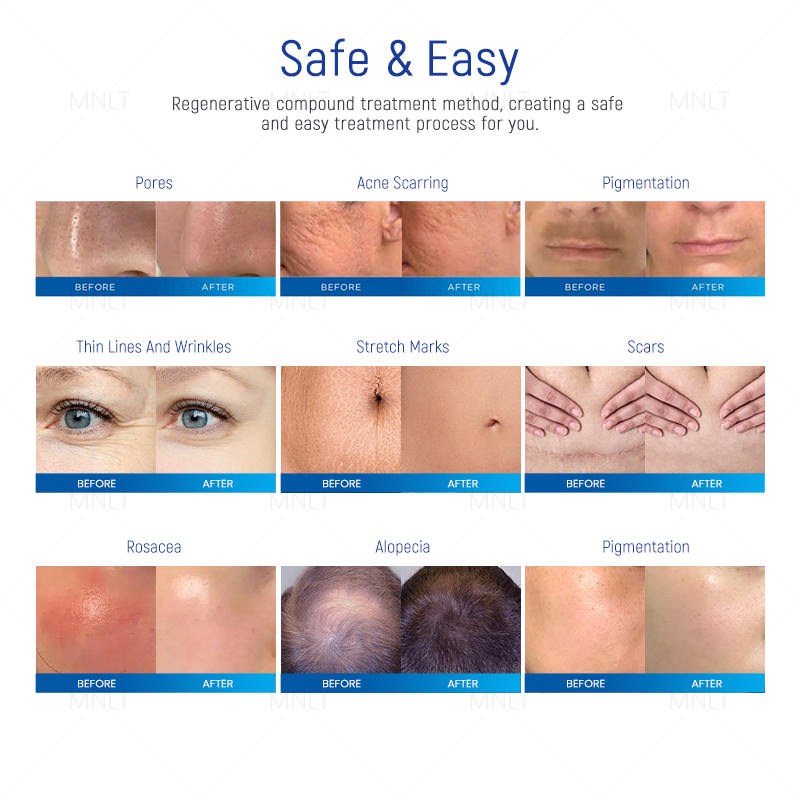
Acne Scarring
Acne scarring remains one of the most established areas associated with microneedling.
Controlled needle penetration can stimulate remodeling in scarred tissue and may help improve the appearance and texture of atrophic acne scars over a series of professionally managed treatments. Clinical literature supports microneedling as a treatment approach for acne-scar improvement, although results are not identical for every patient.
Fine Lines And Wrinkles
As skin ages, collagen and elastin structures change, and visible lines and texture irregularities become more apparent.
Microneedling is commonly incorporated into aesthetic skin-rejuvenation programs designed to improve the appearance of fine lines and uneven texture.
FDA-authorized microneedling devices exist for improving the appearance of facial wrinkles and acne scars for specific populations and indications, demonstrating that microneedling has an established role within certain regulated aesthetic applications.
Enlarged-Looking Pores And Uneven Texture
For customers primarily concerned about rough texture or enlarged-looking pores, microneedling may be incorporated into professional skin-renewal programs.
The controlled micro-injury process can support skin remodeling, while the precise depth control of a motorized pen allows practitioners to tailor their approach according to the treatment area.
Stretch Marks And Scars
Dermapen 4 can also be positioned within professional protocols focused on the appearance of stretch marks and selected scars.
The objective is generally to stimulate controlled remodeling of the affected tissue rather than simply exfoliating the outermost layer of the skin.
Skin Rejuvenation
Beyond individual conditions, microneedling has become a popular category within broader skin-rejuvenation programs.
Clinics may use microneedling as part of services designed around:
- Skin texture
- Fine lines
- Overall skin renewal
- Appearance of scars
- Pore refinement
- Skin firmness and smoothness
The exact applications and permissible claims should always follow the device’s regulatory status and the rules of the destination market.
Dermapen 4 For Different Business Models
A professional microneedling device can serve more than one type of customer.
For aesthetic clinics, Dermapen 4 can become part of a dedicated skin-remodeling menu.
For medical spas, it can complement existing facial rejuvenation and skin-health services.
For beauty clinics, its digital interface and compact pen-style form make it suitable for professional treatment rooms where space and workflow efficiency matter.
For distributors, the broad recognition of microneedling provides a familiar product category with multiple end-user markets.
For private-label brands, an OEM/ODM manufacturing relationship can provide opportunities to customize branding, packaging, accessories, and market positioning.
Wireless And Wired Operation
Commercial flexibility is another practical consideration.
Dermapen 4 supports dual power operation, allowing users to operate the device wirelessly or with a power cord.
This provides greater freedom when moving around a treatment room and can reduce cable restrictions during facial and body procedures.
For clinics with multiple treatment rooms, this feature can also make equipment allocation more convenient.
The device is powered by a rechargeable battery system and can also be connected to an external power supply.
Digital Workflow And User Experience
The control interface is designed around practical information rather than complicated menus.
The screen provides visual indicators for depth and speed, while dedicated controls allow operators to increase or decrease the selected settings.
The interface includes:
This straightforward layout is useful for professional environments because staff can quickly identify the essential operating information.
A More Controlled Alternative To Traditional Roller Microneedling
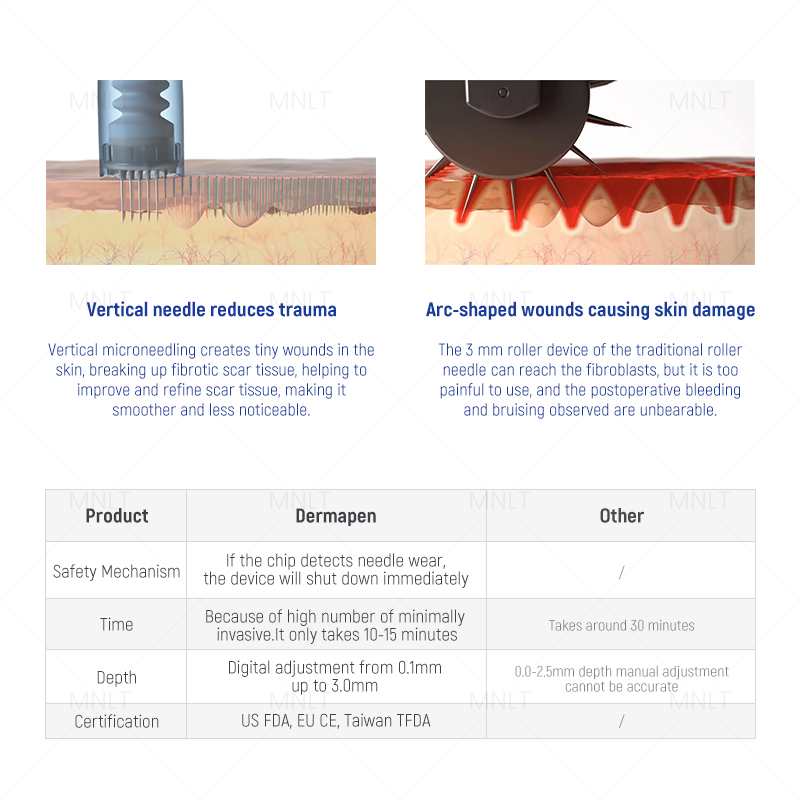
Traditional roller microneedling has a long history in the beauty industry, but its mechanics are fundamentally different.
A roller is dragged across the skin as the needles enter and exit. Depending on the device and technique, this can create angled or arc-shaped penetration paths.
A vertical pen mechanism approaches the skin from above, producing individual punctures rather than dragging a needle across the surface.
This difference is one of the major reasons pen-style automated microneedling has become increasingly popular in professional environments.
The goal is not necessarily to declare one technology universally superior. Rather, the vertical approach offers a different form of control that many practitioners may find useful for precision-oriented skin treatments.
Can Dermapen 4 Enhance Product Absorption?
Microneedling creates temporary microchannels in the skin barrier.
This has led to interest in using microneedling alongside topical skin-care products. However, this area requires careful professional and regulatory consideration.
The FDA specifically states that authorized microneedling devices have not been cleared for the delivery of cosmetics, topical medications, vitamins, drugs, or blood products such as PRP into the skin.
Therefore, clinics should not assume that any serum, cosmetic, medication, or PRP product is automatically approved for use with a microneedling device.
For commercial marketing, it is safer to describe Dermapen 4 as creating temporary microchannels that alter the skin barrier, while any combined-product application should follow the relevant product labeling, professional guidance, and local regulations.
Certification And Quality Considerations
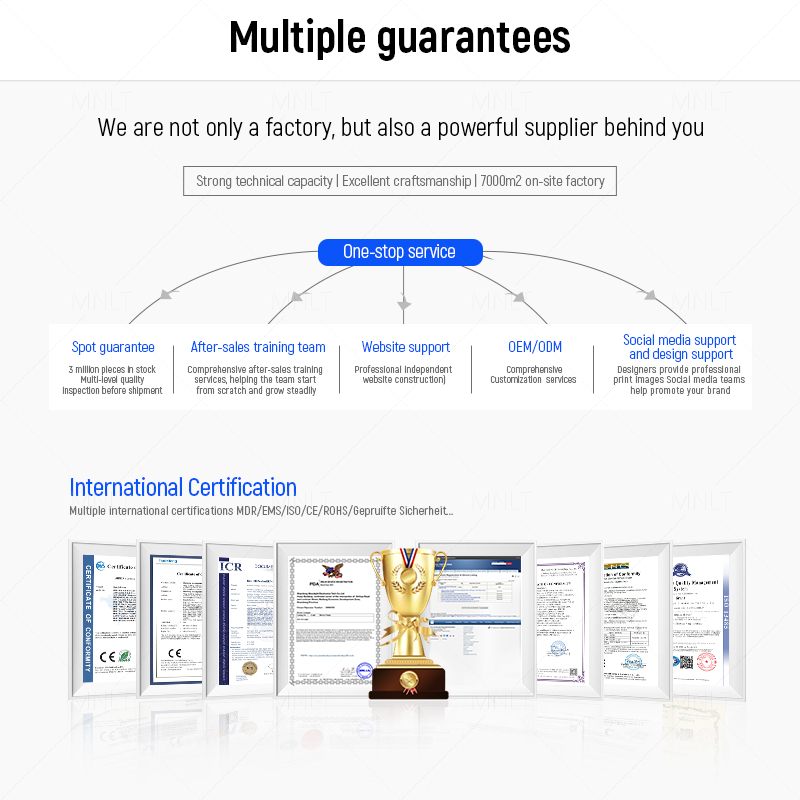
For international B2B buyers, certification is an important part of supplier evaluation.
The product materials supplied for Dermapen 4 identify multiple certification standards, including:
The precise regulatory status and certificate scope should always be verified against the actual model, manufacturer, destination market, and applicable database or certification documentation before marketing the device with a specific regulatory claim.
This distinction is particularly important because the FDA notes that not every microneedling product on the market has been reviewed or legally authorized for the same uses.
A professional buyer should therefore request copies of applicable certificates and regulatory documentation before placing a commercial order.
Product Specifications
| Item | Dermapen 4 Specification |
|---|---|
| Technology | AVON™ Vertical Puncture Technology |
| Needle Configuration | 16 × 33G needles |
| Maximum Depth | 3.0 mm |
| Depth Adjustment | Digital adjustment, approximately 0.1–3.0 mm |
| Depth Accuracy | 0.1 mm |
| Maximum Needle Speed | Up to 1,920 vertical punctures/second |
| Cartridge System | Replaceable disposable heads |
| Safety Technology | RFID Automatic Correction |
| Contamination Management | ACM™ |
| Operation | Wireless or wired |
| Input | 100–240V AC, 50–60Hz |
| Output | 5V DC, 2.4A |
| Battery | 3.7V DC, 800mAh |
| Application | Face and body |
| Use Environment | Professional and selected home-use applications according to regulatory status |
| Warranty | 1 year for this product specification |
| Service | Online support, spare parts, video technical support |
| OEM/ODM | Available |
Designed For Professional Microneedling Workflows
One of the biggest differences between an ordinary microneedling pen and a professionally positioned system is how the equipment fits into the entire workflow.
Dermapen 4 combines:
Together, these features create a platform designed around repeatability, control, and professional usability.
For clinics, that can be more meaningful than simply having the highest possible needle speed.
Why Choose An Experienced Manufacturer?
For international B2B buyers, product technology is only one part of the sourcing decision.
The manufacturer must also be able to support quality control, customization, documentation, logistics, and after-sales service.
Shandong Moonlight Electronic Technology Co., Ltd. is headquartered in Weifang, China, the “World’s Kite Capital,” and has specialized in the research, development, production, sales, and service of professional beauty equipment for 18 years.
The company operates internationally standardized dust-free production facilities and provides equipment solutions for global beauty and aesthetic businesses.
For distributors and private-label brands, key advantages include:
For Dermapen 4 specifically, the supplied product specification lists a 1-year product warranty. Buyers should confirm the exact warranty terms applicable to their order and destination market before purchase.
A Commercial Opportunity For Clinics And Distributors
The popularity of microneedling has created an established category within the global aesthetic equipment market.
For a clinic, a microneedling platform can support multiple skin-focused services from one compact device.
For a distributor, the product can be introduced to clinics, medical spas, beauty centers, and professional skin-care businesses.
For an OEM/ODM customer, the ability to customize branding and market presentation can provide another route into the category.
The key is to move beyond a simple “microneedling pen” sales pitch.
A stronger commercial proposition focuses on:
These are the factors that influence how a device performs not only in a product brochure, but also in a real business environment.
Request Dermapen 4 Specifications And Factory Pricing
For aesthetic clinics, medical spas, beauty professionals, distributors, and private-label brands looking for a digitally controlled microneedling platform, Dermapen 4 offers a combination of vertical puncture technology, high-speed operation, adjustable depth, disposable needle cartridges, and RFID-based safety management.
Shandong Moonlight Electronic Technology Co., Ltd. supports international B2B customers with OEM/ODM customization, free logo design, professional manufacturing, technical support, and global service capabilities.
Contact our team to request the latest Dermapen 4 catalog, technical specifications, factory quotation, certificate documentation, OEM/ODM options, sample availability, and distributor cooperation details.
Send us your target market, required quantity, and branding requirements to receive a tailored quotation for your Dermapen 4 project.

FAQ
1. What is Dermapen 4?
Dermapen 4 is a motorized microneedling system using vertical needle puncture technology. The supplied product specification includes 16 fine 33G needles, digital depth adjustment, high-speed vertical movement, replaceable needle cartridges, and RFID-based automatic correction technology.
2. How deep can Dermapen 4 needles penetrate?
The supplied specification lists a maximum depth of approximately 3.0 mm, with digital adjustment in increments down to approximately 0.1 mm. Actual settings should be selected by appropriately trained professionals according to the treatment area, device instructions, patient assessment, and applicable regulations.
3. What is the advantage of vertical microneedling?
Vertical microneedling is designed to move the needles directly into and out of the skin rather than dragging a roller across the treatment surface. This can provide more controlled and consistent puncture positioning and is one of the main technical differences between automated pen-style and traditional roller devices.
4. What skin concerns can Dermapen 4 be used for?
Microneedling is commonly associated with professional programs addressing the appearance of acne scars, facial wrinkles, uneven texture, enlarged-looking pores, stretch marks, and selected scars. FDA-authorized microneedling devices have specific cleared uses, so the claims and applications for a particular model should always match its regulatory documentation.
5. Are the Dermapen 4 needle cartridges disposable?
The product uses replaceable needle heads designed for single-use professional treatment workflows. The FDA recommends using a new microneedle cartridge for each patient and each treatment session and warns against cartridge reuse because of infection risk.
6. Can I use Dermapen 4 with serums, PRP, or other products?
Microneedling creates temporary openings in the skin, but that does not mean every cosmetic, medication, vitamin product, or PRP preparation is approved for use with the device. The FDA states that microneedling devices have not been cleared for delivering these products into the skin unless specifically authorized. Professional users should follow the device labeling, product labeling, and applicable local regulations.
Post time: Sep-16-2026


