

In modern rehabilitation and sports medicine, choosing the right shockwave technology is about more than delivering high-energy pulses. Treatment precision, focal depth, energy distribution, and the ability to address different tissue structures all influence how a system fits into clinical practice.
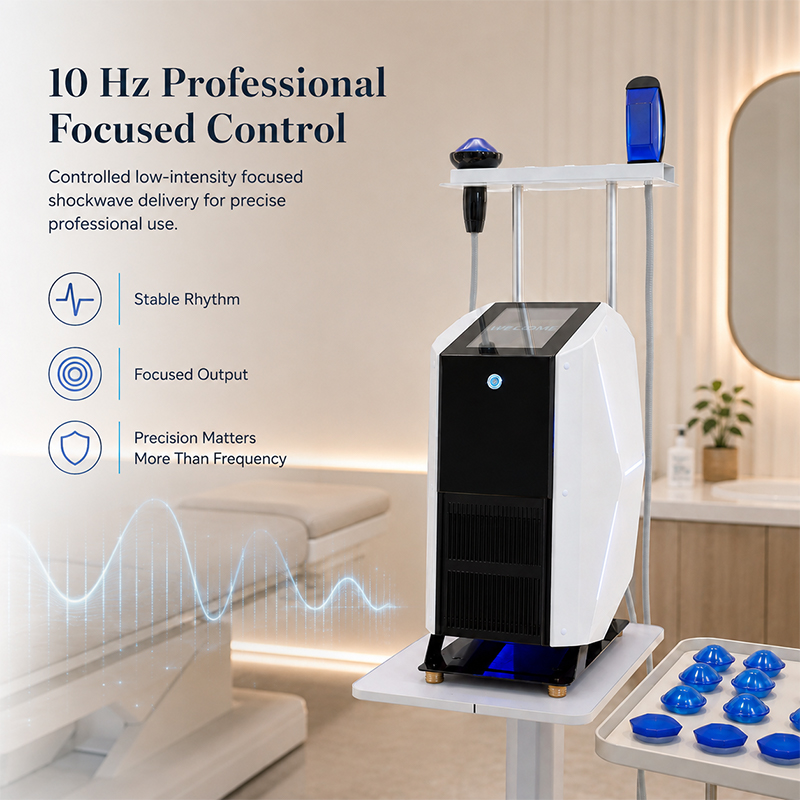
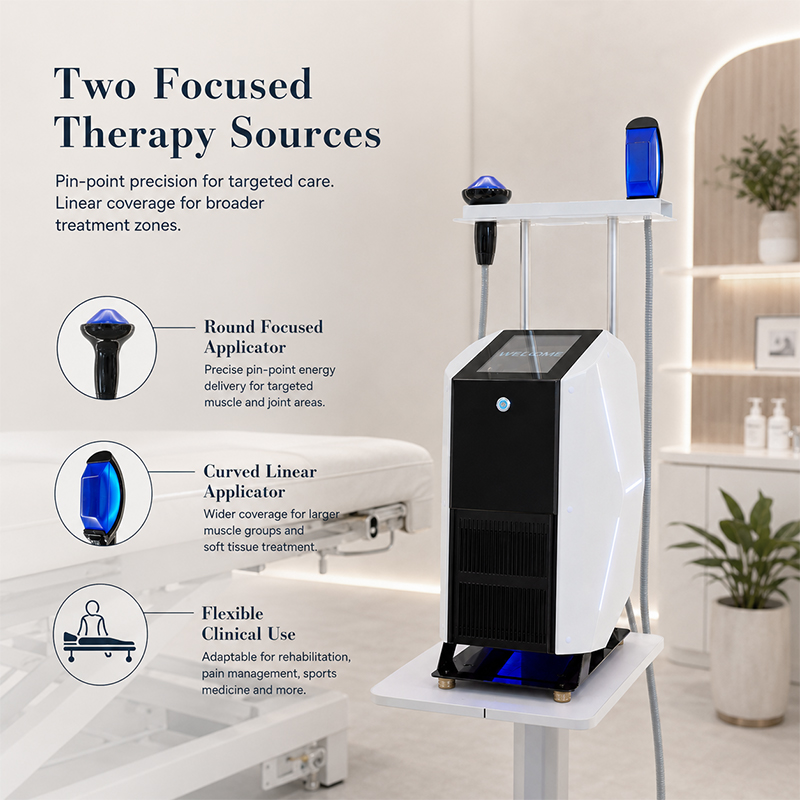
The Dual-Source Piezoelectric Focused Shockwave System, also known as PIEZOBURST, combines two focused shockwave technologies in one professional platform: a precision point-focused applicator and a curved linear-focused applicator.
Rather than relying on a single treatment head for every application, the system offers two different focal geometries designed for different tissue areas. The point-focused source provides a compact focal zone for localized treatment, while the curved linear source delivers a broader, elongated energy distribution for larger soft-tissue regions.
With direct piezoelectric focusing, adjustable focal depth through interchangeable gel pads, and two specialized pulse programs, T-BURST and T-RAMP, PIEZOBURST is designed for professional applications in musculoskeletal rehabilitation, sports medicine, orthopedics, and selected urological and wound-care settings.
For clinics evaluating a professional Dual-Source Piezoelectric Focused Shockwave System, the combination of two focused sources and flexible treatment parameters offers a practical alternative to single-applicator equipment.
What Is a Dual-Source Piezoelectric Focused Shockwave System?
A Dual-Source Piezoelectric Focused Shockwave System is a professional extracorporeal shockwave therapy (ESWT) platform that uses piezoelectric technology to generate and focus acoustic pressure waves.
PIEZOBURST integrates two different treatment sources:
- Point-Focused Shockwave Applicator: Designed for precise energy delivery to relatively small, localized tissue targets.
- Curved Linear-Focused Shockwave Applicator: Designed to distribute focused energy across a wider, elongated treatment region.
Both sources use piezoelectric ceramics to generate pressure waves.
The treatment heads are designed for different focal areas, penetration depths, and energy levels, allowing practitioners to select a suitable applicator according to the anatomical location and treatment objective.
This dual-source configuration is particularly relevant for clinics that work with both localized conditions and larger soft-tissue structures.
How Does Piezoelectric Focused Shockwave Technology Work?
The main technology behind PIEZOBURST is direct piezoelectric focusing.
Inside the treatment applicator, multiple piezoelectric ceramic elements are arranged along a concave supporting surface.
When a short high-voltage electrical pulse is applied, these ceramic elements undergo extremely small dimensional changes.
The resulting mechanical movement generates pressure waves.
Because the ceramic elements are positioned in a precisely designed concave arrangement, the generated pressure waves converge toward a common focal region.
This creates a concentrated acoustic field at the selected treatment depth.
1. Direct Piezoelectric Pressure-Wave Generation
Piezoelectric ceramics convert electrical energy into mechanical movement.
A brief electrical excitation causes the ceramic elements to expand by a very small amount, generating pressure waves that travel through the coupling medium.
2. Precise Acoustic Focusing
The concave arrangement of the ceramic elements directs the generated waves toward a defined focal region.
The system does not require an additional reflector cup to produce the focused pressure field.
This direct-focusing arrangement allows the treatment head to maintain a compact structure while concentrating energy at the intended target.
3. Controlled Energy Delivery
When the focused pressure waves reach the target region, they generate mechanical stimulation within the tissue.
The intensity and distribution of this stimulation depend on the energy flux density, focal geometry, treatment depth, and selected operating parameters.
The system is designed so that changing the energy level does not substantially alter the focal-zone dimensions.
This helps maintain a consistent focal geometry while allowing practitioners to adjust the energy output.
Two Focused Shockwave Sources in One System
One of the most important differences between PIEZOBURST and conventional single-source systems is its two-applicator configuration.
The point-focused and curved linear-focused applicators are designed to address different treatment geometries.
1. Point-Focused Shockwave Applicator
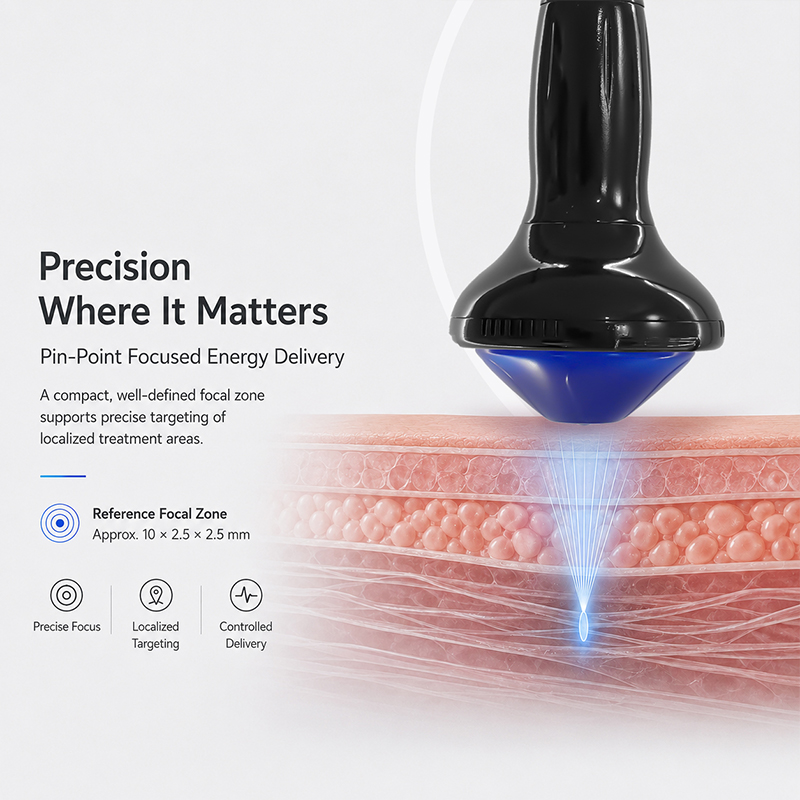
The point-focused applicator produces a compact focal region intended for localized treatment targets.
Its specified parameters are:
| Technical Item | Specification |
|---|---|
| Focal-zone dimensions | Approximately 10 × 2.5 × 2.5mm |
| Maximum focal depth | 40mm |
| Maximum energy flux density (EFD) | 0.82mJ/mm² |
| Available gel pads | 5, 10, 15, 20, 25, 30, 35, and 40mm |
| Number of gel-pad options | 8 |
The relatively small focal zone is designed for accurate targeting when the treatment objective involves a localized anatomical structure.
Typical applications for focused shockwave technology may include selected tendon disorders, calcific tissue conditions, trigger points, and other localized musculoskeletal problems.
In specialist urological settings, focused shockwave systems may also be evaluated for selected conditions such as Peyronie’s disease, depending on the energy protocol, clinical evidence, and applicable regulatory indications.
Why Choose a Point-Focused Applicator?
A small focal region allows energy to be concentrated within a selected treatment target.
This can be useful when treating a relatively small anatomical structure rather than distributing energy across a broad area.
The focal depth can also be adjusted through the use of different gel spacer pads.
2. Curved Linear-Focused Shockwave Applicator
The second treatment source uses a curved linear-focused design.
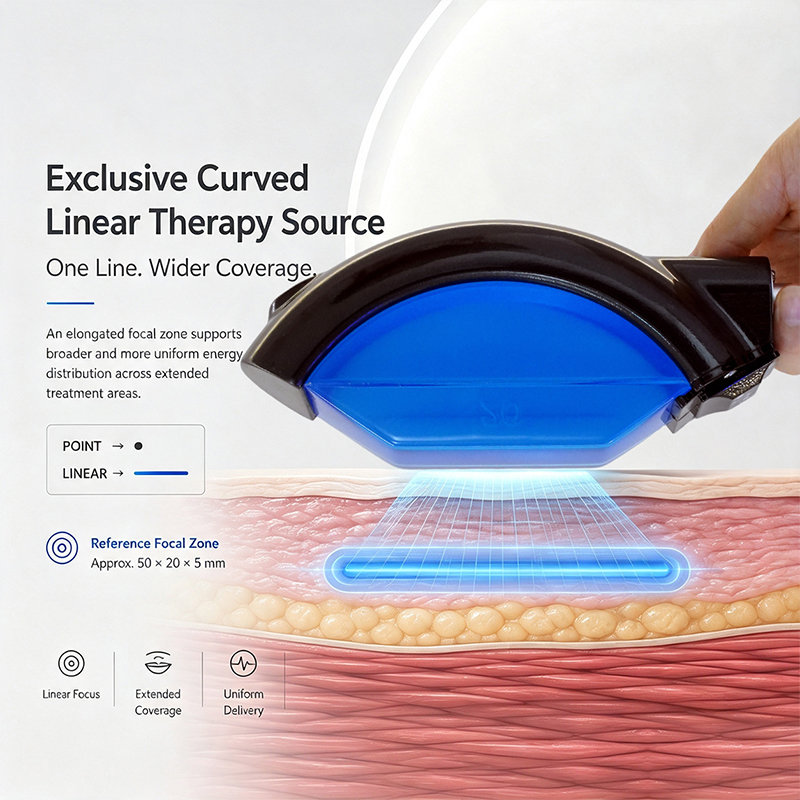
Instead of creating a compact point-like focal region, it generates an elongated focal area intended for broader soft-tissue applications.
Its specified parameters include:
| Technical Item | Specification |
|---|---|
| Focal-zone dimensions | Approximately 50 × 20 × 5mm |
| Maximum focal depth | 20mm |
| Maximum energy flux density (EFD) | 0.17mJ/mm² |
| Available gel pads | 5, 10, 15, and 20mm |
| Number of gel-pad options | 4 |
The elongated focal geometry provides a wider treatment region than the point-focused applicator.
It may be useful for selected applications involving:
- Plantar fascia
- Achilles tendon regions
- Superficial and broader myofascial structures
- Selected tendon-related conditions
- Specialist pelvic and urological applications, where indicated
The linear applicator is designed to distribute energy across an elongated focal area rather than concentrate it at one small point.
For clinical applications involving larger tissue structures, this provides a different treatment approach from the point-focused source.
Point Focus vs. Linear Focus: Which Applicator Should You Choose?
The two applicators are designed for different treatment requirements rather than simply offering two versions of the same treatment head.
| Feature | Point-Focused Source | Curved Linear-Focused Source |
|---|---|---|
| Focal shape | Compact, localized | Wide, elongated |
| Focal dimensions | 10 × 2.5 × 2.5mm | 50 × 20 × 5mm |
| Maximum focal depth | 40mm | 20mm |
| Maximum EFD | 0.82mJ/mm² | 0.17mJ/mm² |
| Gel pad options | 5–40mm | 5–20mm |
| Main advantage | Localized energy concentration | Broader energy distribution |
| Application focus | Localized anatomical targets | Larger soft-tissue regions |
For practitioners, having both options in one machine can simplify equipment selection when working with different anatomical structures.
A localized calcific tendon condition and a broader soft-tissue treatment area may require different focal geometries.
PIEZOBURST provides both approaches within the same platform.
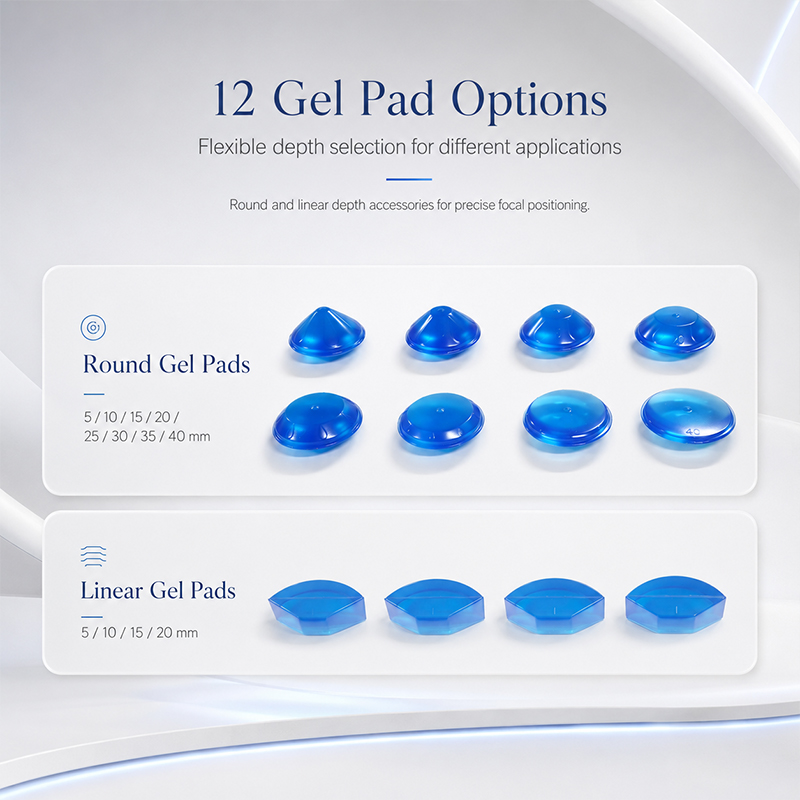
Adjustable Focal Depth with 12 Gel Spacer Options
Precise depth control is an important part of focused shockwave treatment.
PIEZOBURST uses interchangeable gel pads that function as spacers between the treatment source and the contact surface.
By changing the gel-pad thickness, practitioners can adjust the position of the focal region relative to the body surface.
The adjustment is available in 5mm increments.
Point-Focused Gel Pads
The round gel-pad options include:
- 5mm
- 10mm
- 15mm
- 20mm
- 25mm
- 30mm
- 35mm
- 40mm
These eight options provide flexibility when positioning the focal region at different depths.
Linear-Focused Gel Pads
The linear applicator includes four gel-pad options:
- 5mm
- 10mm
- 15mm
- 20mm
These are designed to accommodate the different focal geometry and treatment depth requirements of the curved linear applicator.
Why Does Focal Depth Adjustment Matter?
Different anatomical structures are located at different depths.
The position of a tendon, ligament, calcific deposit, or soft-tissue structure is not the same in every treatment area.
Selecting an appropriate spacer helps align the focal region with the intended target.
This is why the gel-pad system is an important part of the overall treatment configuration rather than just an accessory.
Proper coupling is equally important. The gel pad should be installed securely, air bubbles should be removed, and ultrasound coupling gel should be applied according to the operating instructions.
Air gaps can interfere with acoustic transmission and affect the delivery of shockwave energy.
T-BURST and T-RAMP: Two Specialized Shockwave Treatment Modes
Another distinctive feature of PIEZOBURST is its T-Mode pulse programming.
The system includes two specialized operating modes designed to provide more flexibility in how mechanical stimulation is delivered.
T-BURST: Burst Pulse Mode
T-BURST delivers a sequence of continuous pulses followed by a short pause.
Instead of producing an uninterrupted pulse train, the system divides energy delivery into programmed groups.
The operator can customize:
- Pulse duration
- Pause interval
- Pulse frequency
- Burst sequence settings
This allows practitioners to structure stimulation periods with intervals between pulse groups.
The approach is based on the concept of mechanotransduction, the process through which mechanical stimulation can influence biological signaling pathways.
For professional treatment planning, T-BURST provides an additional option when different pulse patterns are required.
T-RAMP: Frequency Ramp Mode
T-RAMP is a frequency-increasing treatment mode.
Over a programmed period, the pulse frequency gradually increases from an initial setting to a selected target frequency.
This creates a progressive stimulation pattern rather than beginning immediately at the final frequency.
The mode is intended to provide more flexibility when working with different tissue structures and treatment protocols.
The specified frequency can reach a maximum of 10Hz, depending on the selected configuration and operating conditions.
These two modes distinguish PIEZOBURST from systems that offer only conventional fixed-frequency pulse output.
How Does Shockwave Therapy Influence Tissue Responses?
Focused shockwave therapy delivers mechanical stimulation rather than relying primarily on electrical or thermal energy.
When pressure waves interact with the target tissue, they generate mechanical forces that may influence cellular responses.
This process is commonly discussed under the term mechanotransduction.
Mechanical stimulation can activate biological signaling pathways associated with:
- Local vascular responses
- Fibroblast activity
- Tissue remodeling
- Growth-factor signaling
- Cellular migration and proliferation
- Changes in local tissue response
Research into shockwave therapy has examined factors such as VEGF and TGF-β1, which are associated with vascular and tissue-remodeling processes.
The proposed biological mechanisms are one reason focused shockwave therapy has been investigated in musculoskeletal rehabilitation and selected tissue-repair applications.
Clinical Applications: Musculoskeletal Rehabilitation and Sports Medicine
Musculoskeletal rehabilitation is one of the major application areas for extracorporeal shockwave therapy.
Depending on the device’s approved indications and the practitioner’s clinical assessment, focused shockwave systems may be used in treatment programs involving selected tendon, muscle, and bone conditions.
The International Society for Medical Shockwave Treatment (ISMST) lists several established clinical indications for shockwave therapy.
These include selected chronic tendinopathies, delayed bone healing, non-union, and certain skin conditions.
1. Shoulder and Rotator Cuff Conditions
Shoulder problems can involve tendons, connective tissue, and surrounding structures.
Focused shockwave therapy is used in selected treatment programs involving:
- Calcific shoulder tendinopathy
- Rotator cuff-related tendon conditions
- Selected biceps tendon disorders
The point-focused applicator can be considered when precise localization of a treatment target is required.
Actual suitability depends on imaging findings, the diagnosis, and professional assessment.
2. Tennis Elbow and Golfer’s Elbow
Lateral and medial elbow tendinopathies are common conditions in people who perform repeated arm movements.
These conditions can affect athletes, manual workers, and people who spend long periods performing repetitive tasks.
Shockwave therapy has been investigated as one option for selected chronic tendon-related conditions.
3. Achilles Tendinopathy
Achilles tendon problems are frequently associated with sports activities and repetitive mechanical loading.
The linear-focused applicator’s elongated focal region may be useful when addressing selected larger tendon areas.
Treatment should be based on an assessment of the tendon structure, affected region, and clinical stage.
4. Plantar Fasciitis
Plantar fasciitis is one of the most frequently discussed applications of extracorporeal shockwave therapy.
The condition involves pain and structural changes in the plantar fascia, commonly affecting the underside of the heel.
Focused shockwave therapy has been evaluated in patients with persistent symptoms.
5. Knee and Patellar Tendon Conditions
Selected tendon-related conditions around the knee may also be considered in shockwave treatment programs.
These include patellar tendinopathy and certain chronic tendon disorders.
A qualified professional should determine whether focused treatment is suitable after clinical assessment.
6. Myofascial Pain and Trigger Points
Muscle-related pain and myofascial trigger points can affect different areas of the body.
Focused and linear shockwave technologies offer different energy-distribution options for selected muscular treatment areas.
The point-focused source may be useful when targeting a localized structure, while the linear source offers broader coverage.
Urological Applications: A Specialized Treatment Area
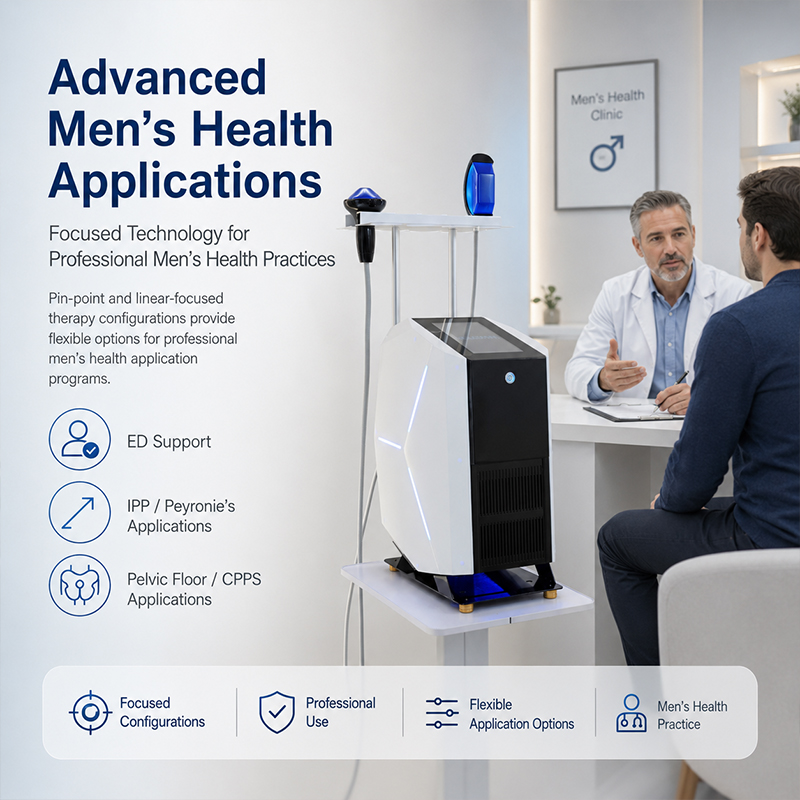
The dual-source configuration also makes PIEZOBURST relevant to certain specialist urological applications.
This area requires particular attention to clinical evidence, treatment energy, patient selection, and regulatory authorization.
Erectile Dysfunction (ED)
Low-intensity extracorporeal shockwave therapy has been investigated for selected men with vasculogenic erectile dysfunction.
The proposed mechanism involves mechanical stimulation and biological responses associated with vascular function.
The European Association of Urology (EAU) guidelines report that low-intensity shockwave therapy may produce a mild improvement in erectile function among men with vasculogenic ED.
The EAU gives this treatment a weak recommendation for selected patients, including men with mild vasculogenic ED and certain patients who are unsuitable for or do not respond adequately to other treatments.
Importantly, these recommendations refer to low-intensity shockwave treatment and should not automatically be applied to every focused shockwave generator or energy configuration.
European Association of Urology – Management of Erectile Dysfunction.
Peyronie’s Disease (IPP)
Peyronie’s disease involves the development of fibrous plaques within penile tissue and can be associated with curvature and discomfort.
Focused shockwave therapy has been explored in this field, particularly in relation to pain management.
However, clinical evidence is not sufficient to assume that shockwave therapy reliably removes calcified plaques or corrects penile curvature.
The ISMST classifies Peyronie’s disease as an exceptional expert indication rather than a routine standard indication.
Chronic Pelvic Pain Syndrome
Selected pelvic pain conditions have also been explored in shockwave research.
Applications should remain within the scope of specialist assessment and the device’s approved indications.
For clinics considering urological services, it is essential to distinguish between established clinical indications, expert-level applications, and procedures that remain under investigation.
Skin and Wound-Care Applications
Focused shockwave therapy has also been investigated in certain skin and wound-related applications.
The ISMST lists delayed or non-healing wounds and skin ulcers among its standard shockwave indications.
Potential treatment objectives may include supporting local tissue responses and wound-healing processes.
However, wound management requires a comprehensive clinical approach.
The underlying cause of an ulcer, circulation status, infection risk, and other medical conditions must be assessed before treatment.
A shockwave device should not be positioned as a standalone replacement for established wound-care management.
Why Choose a Dual-Source Focused Shockwave System?
For professional clinics, the biggest advantage of a dual-source system is the ability to select between two different focal geometries.
Rather than purchasing separate equipment for point-focused and linear-focused treatments, practitioners can access both configurations within one platform.
The PIEZOBURST system offers several practical features.
Two Focal Geometries in One Machine
The point-focused and curved linear-focused applicators address different treatment-area requirements.
Adjustable Focal Depth
Twelve gel-pad options provide multiple depth settings through the interchangeable spacer system.
Direct Piezoelectric Focusing
The concave piezoelectric ceramic arrangement generates focused pressure waves without an additional reflector cup.
Stable Focal Geometry
The design is intended to maintain a consistent focal region while the energy output is adjusted.
Specialized T-Mode Programs
T-BURST and T-RAMP provide additional pulse-pattern and frequency-control options.
Designed for Professional Operation
Built-in anatomical treatment presets and manual adjustment functions support different clinical workflows.
For rehabilitation and specialist practices, these features provide a broader treatment configuration than a single-head focused shockwave system.
A Professional Operating System with Preset and Manual Parameters
Equipment should offer both convenience for routine operation and flexibility for experienced practitioners.
PIEZOBURST includes preset programs for selected anatomical treatment areas.
These presets are designed to provide a starting point for treatment parameter selection.
The system also supports manual customization, allowing qualified users to adjust operating parameters according to the treatment requirements.
This combination makes it possible to maintain a more standardized workflow while preserving clinical flexibility.
Preset values should not be interpreted as universal treatment prescriptions. Patient-specific evaluation and the official operating instructions remain essential.
Technical Specifications of PIEZOBURST
The following table summarizes the main product specifications.
| Specification | Point-Focused Source | Curved Linear-Focused Source |
|---|---|---|
| Energy technology | Direct piezoelectric focusing | Direct piezoelectric focusing |
| Focal geometry | Compact point focus | Elongated linear focus |
| Focal-zone dimensions | 10 × 2.5 × 2.5mm | 50 × 20 × 5mm |
| Maximum focal depth | 40mm | 20mm |
| Maximum EFD | 0.82mJ/mm² | 0.17mJ/mm² |
| Gel pad options | 5–40mm, 8 options | 5–20mm, 4 options |
Additional System Specifications
| Item | Specification |
|---|---|
| System configuration | Dual treatment sources |
| Maximum frequency | 10Hz |
| T-Mode programs | T-BURST and T-RAMP |
| Treatment-head pulse life | Up to 5 million pulses |
| Anatomical presets | Built-in treatment-site options |
| Parameter control | Preset and manual adjustment |
| Packaging dimensions | 42 × 27 × 62cm |
| Gross weight | Approximately 37kg |
The quoted maximum EFD, focal depth, and focal-zone dimensions refer to the respective applicator specifications. Actual output and treatment settings depend on the selected configuration and operating protocol.
Maintenance and Treatment Preparation
Proper preparation and routine maintenance are important for maintaining consistent acoustic energy transmission.
The gel spacer pads form part of the acoustic coupling system, so their installation and cleaning should be handled carefully.
Recommended preparation includes:
Check the Applicator
Inspect the treatment head before use and make sure there is no visible damage.
Clean the Treatment Head
Remove residual coupling gel after each treatment and clean the applicator according to the operating instructions.
Install the Appropriate Gel Pad
Select the correct pad thickness according to the intended focal depth.
Remove Air Bubbles
Make sure that no air is trapped between the gel pad and the treatment interface, because air can interfere with acoustic transmission.
Apply Coupling Gel
Apply suitable ultrasound coupling gel to the contact surface before treatment.
Select the Treatment Parameters
Use the built-in presets as a reference and adjust the parameters according to the clinical assessment and intended indication.
Alcohol disinfection should only be used on compatible gel pads and surfaces according to the equipment’s cleaning instructions.
Why Consider PIEZOBURST for Your Clinical Practice?
The Dual-Source Piezoelectric Focused Shockwave System may be particularly relevant to practices that need more than one focused shockwave treatment geometry.
Rehabilitation Clinics
For professional practices working with selected chronic tendon and soft-tissue conditions.
Sports Medicine Centers
For facilities managing athletes and active individuals with appropriate musculoskeletal indications.
Orthopedic Clinics
For specialist practices evaluating focused shockwave technology in tendon, bone, and selected tissue applications.
Urology and Men’s Health Clinics
For specialist settings investigating appropriate shockwave applications within current clinical guidance and device indications.
Wound-Care Facilities
For professional settings considering shockwave treatment as part of an appropriate wound-management program.
For all of these settings, clinical governance, operator qualifications, and regulatory requirements should be established before introducing the system into practice.
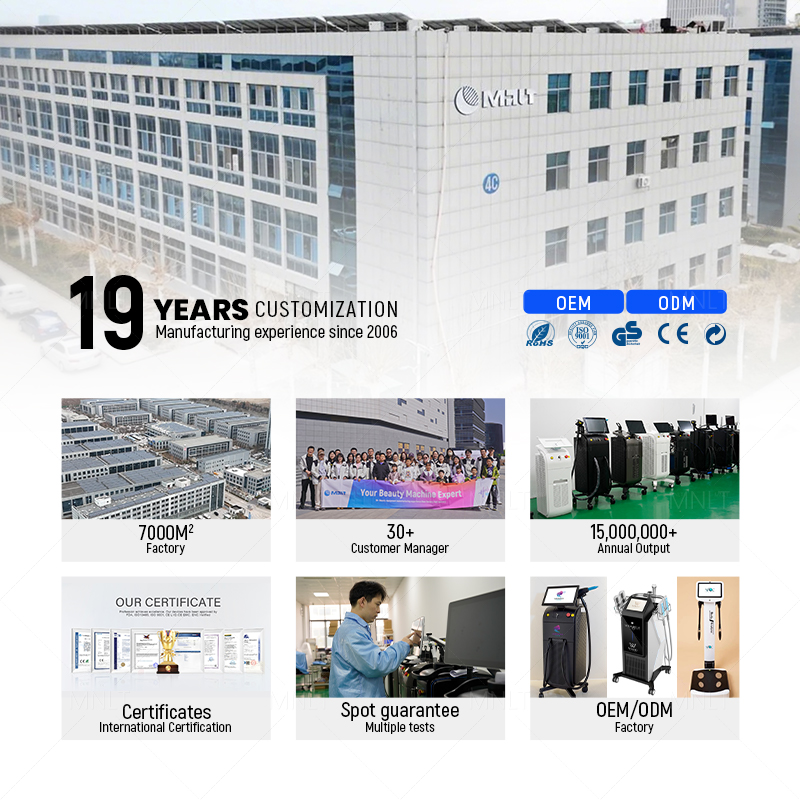
Why Choose MNLT LASER?
Shandong Moonlight Electronic Technology Co., Ltd. is headquartered in Weifang, China, known as the World Kite Capital.
With 18 years of experience in the professional beauty and medical aesthetic equipment industry, the company focuses on research, development, production, sales, and after-sales service for international customers.
Its business capabilities include:
- Internationally standardized dust-free production facilities
- OEM/ODM customization options
- Free logo design for eligible projects
- ISO, CE, and FDA-related certifications and documentation, subject to verification of the specific product and certificate scope
- Two-year warranty, subject to applicable product terms
- 24-hour after-sales support
- Product testing before shipment
- Technical assistance and operating guidance
For international equipment buyers, a long-term supplier relationship should include more than the initial purchase.
Access to technical documentation, replacement components, product training, and responsive after-sales assistance can all contribute to smoother equipment operation.
MNLT LASER works with international partners looking for professional equipment solutions and customized product options.
What Should You Check Before Purchasing a Focused Shockwave System?
When comparing a Dual-Source Piezoelectric Focused Shockwave System with conventional shockwave equipment, several technical details deserve attention.
1. Focal Geometry
Check whether the system offers point-focused, linear-focused, or radial pressure-wave treatment. These are different energy-delivery approaches and should not be treated as interchangeable.
2. Energy Flux Density
Request the maximum and adjustable EFD ranges for each treatment head. Also clarify the conditions under which the values are measured.
3. Focal Depth
Review the actual focal depth, focal-zone dimensions, and available gel-pad configurations.
4. Treatment Head Lifespan
Ask about the stated five-million-pulse lifespan, how it was tested, and which components are covered by the applicable warranty.
5. Pulse Programming
Confirm the operating differences between T-BURST and T-RAMP, including adjustable frequency, pulse duration, and pause intervals.
6. Clinical Applications
Check whether the intended treatment indications are supported by relevant clinical evidence and permitted under local regulations.
7. Training and Service
Ask about operator education, maintenance requirements, spare parts, and technical support.
These details are particularly important for professional medical equipment because treatment effectiveness depends on more than the maximum energy specification.

Frequently Asked Questions About Dual-Source Piezoelectric Focused Shockwave Systems
1. What is a Dual-Source Piezoelectric Focused Shockwave System?
A Dual-Source Piezoelectric Focused Shockwave System is an extracorporeal shockwave platform that incorporates two focused treatment sources: a point-focused applicator and a curved linear-focused applicator. PIEZOBURST uses direct piezoelectric focusing to generate concentrated acoustic pressure waves for different tissue targets.
2. How does piezoelectric focused shockwave technology work?
The system uses concavely arranged piezoelectric ceramic elements. When activated by short high-voltage pulses, the elements generate mechanical pressure waves that converge toward a defined focal region.
3. What is the difference between point-focused and linear-focused shockwaves?
Point-focused shockwaves concentrate energy within a relatively small focal region, making them suitable for localized treatment targets. Linear-focused shockwaves distribute energy across an elongated focal area, making them useful for broader soft-tissue structures.
4. What is the maximum penetration depth?
The point-focused applicator has a specified maximum focal depth of 40mm, while the curved linear-focused applicator has a maximum focal depth of 20mm. Interchangeable gel pads allow practitioners to adjust focal positioning in 5mm increments.
5. What is the maximum energy flux density?
The point-focused applicator has a specified maximum EFD of 0.82mJ/mm², while the curved linear-focused applicator has a specified maximum EFD of 0.17mJ/mm². The actual treatment setting should be selected according to the indication and professional protocol.
6. What are the advantages of direct piezoelectric focusing?
The direct piezoelectric design uses concavely arranged ceramic elements to generate focused pressure waves without an additional reflector cup. It is designed to provide a compact treatment head, relatively low operating noise, and a defined focal region.
7. What are T-BURST and T-RAMP modes?
T-BURST delivers groups of pulses separated by programmed pauses, with adjustable pulse duration, pause intervals, and frequency. T-RAMP gradually increases pulse frequency from an initial value to a selected target frequency over a specified period.
8. What conditions can focused shockwave therapy be used for?
Depending on the device’s approved indications and professional assessment, shockwave therapy may be considered for selected chronic tendinopathies, plantar fasciitis, certain bone-healing conditions, myofascial problems, and selected skin or wound-care applications. Urological indications require specialist evaluation and careful consideration of the available evidence.
9. Can the system be used for erectile dysfunction?
Low-intensity shockwave therapy has been investigated for selected cases of vasculogenic erectile dysfunction. The European Association of Urology gives a weak recommendation for selected patients, but these recommendations should not automatically be applied to every focused shockwave system. Treatment must be based on specialist assessment, the specific energy protocol, and applicable device authorization.
10. Is focused shockwave therapy painful?
Treatment sensation varies according to energy level, focal target, anatomical location, and individual sensitivity. Some treatments may produce discomfort, particularly when higher energy levels are used. The system should not be represented as completely painless.
11. How long do the treatment heads last?
The specified maximum treatment-head lifespan is up to five million pulses. Actual service life depends on operating conditions, maintenance, and the treatment parameters used. Buyers should request clarification of the test conditions and warranty coverage.
12. How many gel pads are included in the system?
The system offers eight round gel-pad options for the point-focused applicator and four linear gel-pad options for the curved applicator, giving a total of twelve available spacer configurations. The included accessories should be confirmed in the purchase quotation.
Request a Quote for the Dual-Source Piezoelectric Focused Shockwave System
For professional practices looking to expand their shockwave treatment capabilities, PIEZOBURST offers two different focused energy geometries within one platform.
Its combination of direct piezoelectric focusing, compact point-focus and broad linear-focus applicators, adjustable focal depth, and T-BURST and T-RAMP pulse programs provides several technical features worth evaluating.
Whether you operate a rehabilitation clinic, sports medicine center, orthopedic practice, urology clinic, or medical equipment distribution business, reviewing the actual technical configuration is the best starting point.
Contact MNLT LASER to request:
- Complete PIEZOBURST technical specifications
- Point-focused and linear-focused applicator details
- EFD and focal-depth testing documentation
- Twelve gel spacer configurations
- T-BURST and T-RAMP operating information
- Treatment-head lifespan and maintenance details
- OEM/ODM and private-label options
- Regulatory documentation for your target market
- Wholesale pricing and international shipping information
When submitting your inquiry, include your country, clinic or company name, intended clinical applications, and estimated order quantity. This will help the sales team prepare a quotation based on your requirements.
Looking for a professional Dual-Source Piezoelectric Focused Shockwave System for your clinic or distribution business? Contact MNLT LASER today to explore PIEZOBURST and request a personalized quotation.
Post time: Nov-23-2026


