

Understanding what is happening beneath the skin’s surface has become an important part of modern beauty consultations. Today’s clients want more than a quick visual assessment. They want to see their skin concerns, understand their skincare needs, and follow measurable changes throughout their treatment journey.
An AI Skin Analyzer makes this process more visual, detailed, and data-driven.
Combining nine-spectral imaging technology, AI-assisted image analysis, facial and scalp detection, and comprehensive reporting, the latest AI skin analysis systems give beauty clinics and aesthetic studios a more structured way to assess skin conditions and communicate treatment recommendations.
The MNLT LASER AI Skin Analyzer goes beyond basic facial photography. It is designed to examine multiple visible and image-based skin indicators, provide detailed facial and scalp reports, compare skin changes over time, and support customer management and product recommendations.
For professional beauty businesses, it offers a practical way to connect skin analysis, personalized skincare consultations, and everyday store operations within one intelligent platform.
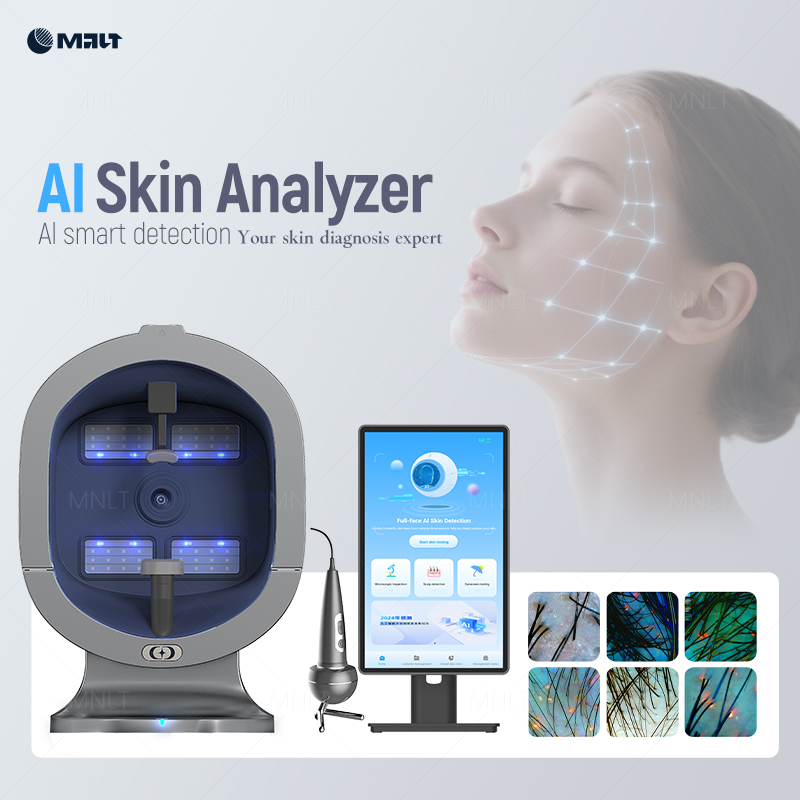
What Is an AI Skin Analyzer?
An AI Skin Analyzer is a professional imaging system that uses specialized lighting, multispectral photography, and AI-assisted image processing to examine different aspects of facial skin.
Unlike a conventional beauty camera that captures only what is visible under normal lighting, an AI skin analysis system uses multiple imaging modes to reveal additional skin details.
Depending on the selected imaging mode, the system can help visualize concerns such as:
- Acne and blackheads
- Enlarged pores and excess sebum
- Surface and deeper pigmentation patterns
- Uneven skin tone
- Visible redness and sensitivity-related patterns
- Fine lines and wrinkles
- Skin texture and roughness
- Fluorescent agent distribution
- Porphyrin-related fluorescence patterns
- Collagen-related image indicators
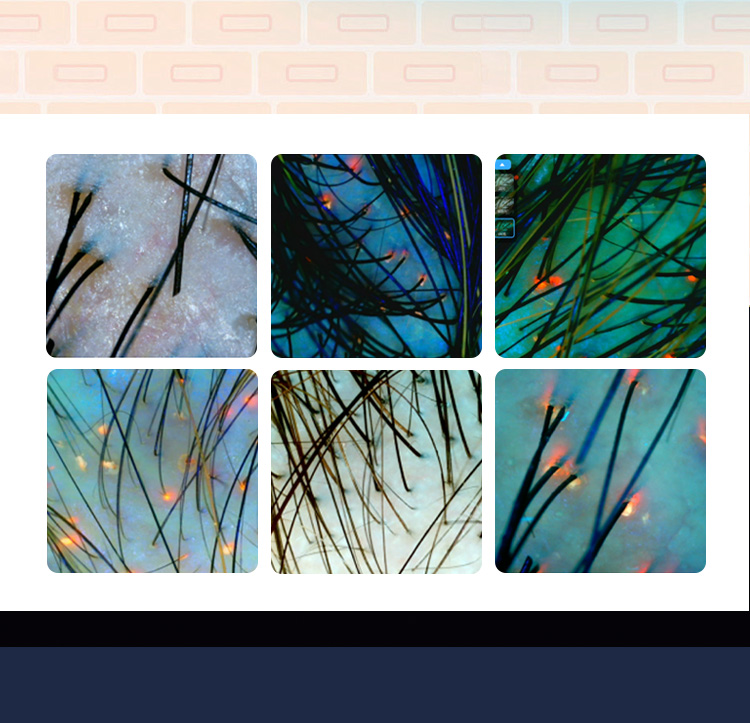
The system also offers scalp imaging, making it possible to assess selected scalp characteristics alongside facial skin conditions.
By combining multiple images with AI-assisted analysis, the equipment produces visual reports that can help professionals explain skin concerns and organize personalized skincare consultations.
It is important to understand that AI skin analysis is a cosmetic assessment and consultation tool. Its image-based findings are not a substitute for a medical examination or a dermatologist’s diagnosis.
Nine-Spectral Imaging: A More Detailed View of Skin
One of the main features of the MNLT LASER AI Skin Analyzer is its nine-spectral imaging technology.
Different light sources interact with the skin in different ways. By capturing and processing images under multiple lighting conditions, the system can highlight skin details that may not be easy to observe in an ordinary photograph.
This provides a more comprehensive visual reference for professional consultations.
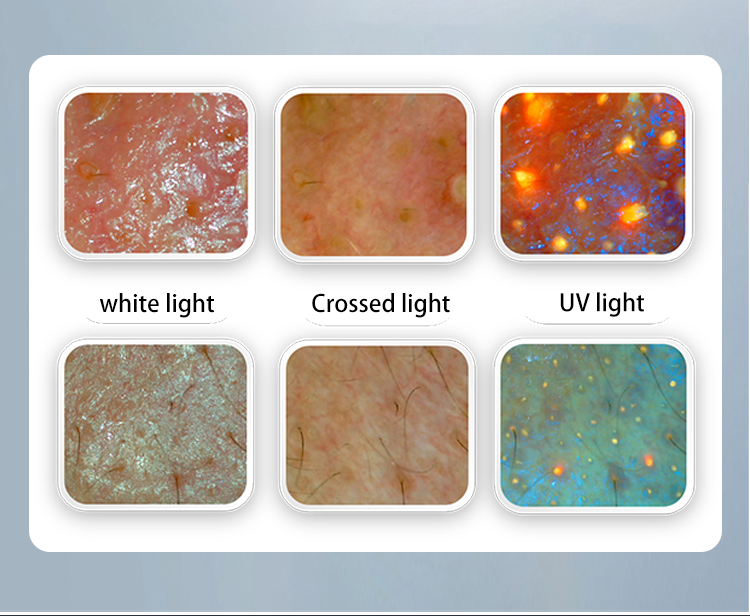
1. White Light Imaging
White light captures the skin’s appearance under a natural-looking light source.
It is useful for observing visible surface concerns, including:
- Acne and acne marks
- Pigmented spots
- Enlarged pores
- Uneven skin appearance
- Surface imperfections
For beauty professionals, this provides a familiar starting point when discussing a client’s visible skin concerns.
2. Crossed Light Imaging
Crossed light imaging helps highlight certain skin structures and surface features that may be difficult to distinguish under standard lighting.
It can be used to examine:
- Visible facial capillaries
- Redness-related patterns
- Acne distribution
- Skin tone uniformity
These images provide additional visual information for discussing sensitive-looking areas and uneven skin appearance.
3. Directional Light Imaging
Directional light emphasizes surface texture by illuminating the skin from a specific direction.
This makes it easier to observe fine details, such as:
- Fine lines and wrinkles
- Uneven skin texture
- Surface roughness
- Small depressions
- Localized texture irregularities
For clients concerned about early signs of skin aging, directional imaging can make subtle surface changes easier to see during a consultation.
4. UV Light Imaging
UV imaging provides additional visual information about selected skin characteristics that may not be obvious under white light.
Depending on the imaging mode, it can help visualize:
- Certain pigmentation patterns
- Pore-related concerns
- Fluorescence-related signals
- Oil-related distribution patterns
UV imaging can also be useful for comparing image patterns over time, provided the lighting and imaging conditions remain consistent.
5. Deep-Pigment Imaging
The deep-pigment imaging mode is designed to highlight pigment-related patterns beneath the visible skin surface.
It can provide additional visual references when assessing:
- Deeper pigment distribution
- Sun-related pigmentation patterns
- Brown spots
- Uneven pigmentation
- Existing pigmentation marks
This type of image analysis helps professionals discuss pigmentation concerns beyond what can be seen in a standard facial photograph.
6. Composite UV Imaging
Composite UV imaging combines fluorescence-related image analysis with additional image-processing techniques.
It is designed to visualize patterns associated with:
- Surface oil distribution
- Porphyrin-related fluorescence
- Selected skin microflora-associated fluorescence patterns
- Pigment distribution
These findings can support cosmetic skin consultations. They should not be interpreted as a laboratory identification of bacteria or a confirmed diagnosis of skin infection.
RBX Red and Brown Image Analysis
In addition to its different imaging modes, the AI Skin Analyzer uses RBX image-processing technology to produce red and brown analysis charts.
RBX Red Chart
The red chart highlights image patterns associated with hemoglobin distribution beneath the skin.
It can help visualize areas associated with visible redness, sensitivity-related patterns, and inflammation-related changes.
RBX Brown Chart
The brown chart focuses on pigmentation-related image patterns, helping display the location, area, shape, and distribution of selected brown spots and UV-associated pigmentation.
Pigment Distribution Chart
This analysis presents the distribution of selected pigment-related indicators across different facial areas, including spots and acne marks.
Together, these visual tools provide more information for discussing skin appearance and planning cosmetic skincare programs.
Five-Dimensional Skin Detection
A comprehensive skin consultation should consider more than one concern at a time.
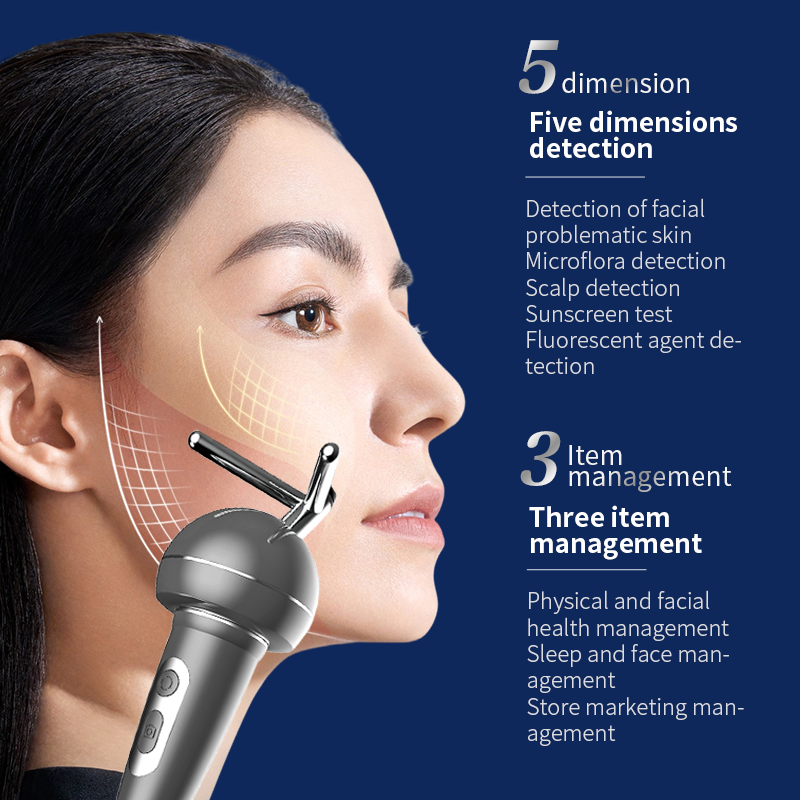
The MNLT LASER AI Skin Analyzer supports five-dimensional detection, bringing several assessment functions into one system.
1. Facial Skin Condition Analysis
Full-face AI skin detection helps visualize multiple facial skin concerns within a single assessment.
The system can analyze image-based indicators associated with:
- Acne
- Blackheads
- Pores
- Excess sebum
- Pigmentation
- Sensitivity-related patterns
- Wrinkles
- Collagen-related indicators
- Skin roughness
- Uneven skin tone
This provides a convenient starting point for discussing personalized skincare needs rather than focusing on only one visible concern.
2. Microflora-Related Imaging
Through fluorescence-based imaging, the system can display selected patterns associated with skin surface microflora and porphyrin-related signals.
For beauty professionals, this can offer an additional visual reference when discussing oily skin and blemish-prone skin.
These image patterns should be treated as screening and consultation references rather than confirmed microbiological results.
3. Scalp Detection
Skin analysis does not have to stop at the face.
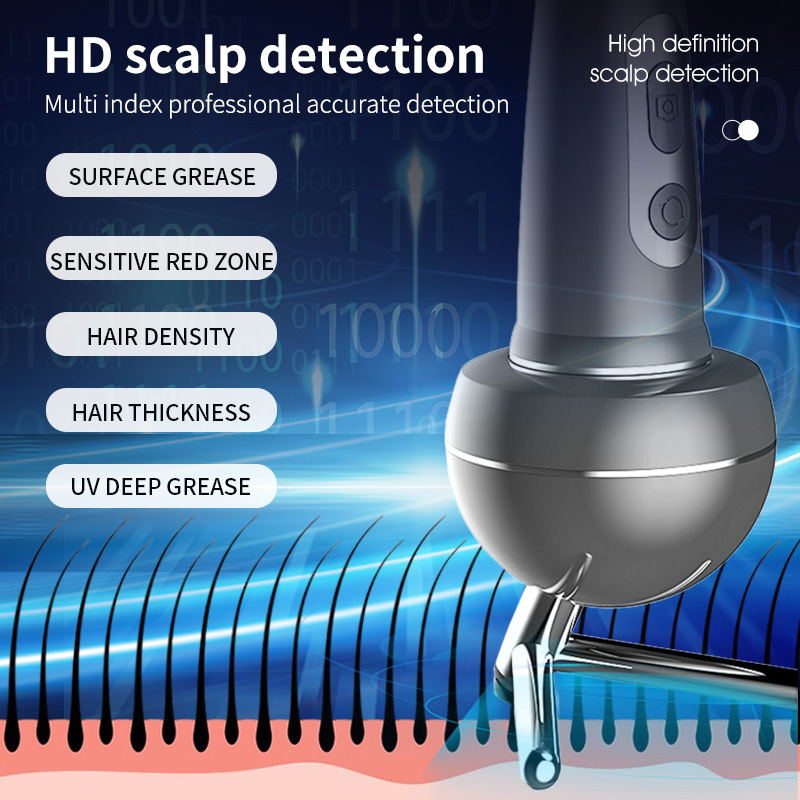
The system includes a dedicated scalp detection function designed to evaluate several scalp-related indicators.
Its main analysis categories include:
| Scalp Indicator | What It Helps Visualize |
|---|---|
| Surface Grease | Visible scalp oil distribution |
| Sensitive Red Zone | Redness-related scalp image patterns |
| Hair Density | Visible hair distribution |
| Hair Thickness | Hair-shaft appearance and thickness indicators |
| UV Deep Grease | Additional oil-related patterns under UV imaging |
For salons and scalp-care studios, this additional function can help create more detailed scalp consultations and broaden the range of services offered.
4. Sunscreen Testing
The sunscreen testing function provides an additional way to demonstrate sunscreen coverage through imaging.
It can help customers better understand the importance of even sunscreen application and daily UV protection.
This visual demonstration may also make skincare education more engaging during consultations.
5. Fluorescent Agent Detection
The fluorescent agent detection function helps visualize certain fluorescent substances on the skin under specialized lighting.
It can provide an additional reference when discussing skincare application and product-related fluorescence.
The results should be interpreted according to the imaging mode and should not be treated as a definitive identification of a particular cosmetic ingredient.
HD Scalp Analysis: More Than a Facial Skin Camera
One feature that makes this AI Skin Analyzer particularly interesting for professional beauty businesses is its dedicated scalp analysis capability.
Many beauty devices focus exclusively on facial skin. By including scalp imaging, this system can support a broader range of cosmetic consultations.
The high-definition scalp imaging function provides several visual indicators, including surface grease, sensitive red zones, hair density, hair thickness, and UV-related deep grease patterns.
For businesses offering scalp-care services, these images can make consultations more interactive.
Instead of relying entirely on verbal descriptions, professionals can show customers what the imaging system captures and explain which areas may benefit from further attention.
This can also help create a more structured follow-up process, with image comparisons used to discuss visible changes over time.
AI Intelligent Chip for Automated Image Analysis
Capturing detailed images is only one part of a professional skin analysis system. The ability to process and organize those images is equally important.
The MNLT LASER AI Skin Analyzer is equipped with an AI intelligent chip designed to support image recognition and analysis.
After image capture, skin-related indicators can be processed through the system’s AI-assisted analysis workflow, with cloud computing available for quantitative image analysis.
The platform is designed to help professionals:
- Identify selected skin concerns from captured images
- Organize different skin indicators
- Review facial and scalp analysis results
- Generate comprehensive reports
- Compare images from different sessions
- Present findings in a more visual format
For beauty consultants, this can make the consultation process easier to follow and help customers understand why certain skincare recommendations are being discussed.
AI-generated results should always be reviewed by a trained professional. They are intended to support consultation and service planning, not replace professional judgment.
3D Imaging and Multi-Angle Skin Visualization
A flat facial photograph cannot always communicate every detail clearly.
To make skin analysis more intuitive, the system offers additional image-viewing functions that allow professionals to examine facial features from different angles.
3D Facial Imaging
The 3D imaging function helps present facial contours and selected surface details in a more visual format.
Users can rotate the image and view different facial angles, making it easier to focus on specific areas during a consultation.
360-Degree Viewing
The 360-degree viewing function allows users to examine different parts of the captured image from multiple directions.
This provides a broader visual reference without relying on a single front-facing photograph.
Localized Image Magnification
Professionals can enlarge selected areas to examine specific concerns more closely.
For example, they may zoom in on:
- Enlarged pores
- Pigmented spots
- Fine lines
- Uneven skin texture
- Localized redness
3D Simulation and Texture Heatmaps
Additional functions include 3D simulation slicing and texture heatmap visualization.
These tools can help translate image data into a format that is easier for customers to understand.
The goal is not simply to produce more images. It is to make the consultation more informative and help customers follow the changes being discussed.
Skin Sensitivity and Collagen-Related Analysis
The AI Skin Analyzer also includes specialized image-processing maps designed to provide additional visual references for skin appearance.
Sensitive Skin Heatmap
Using RBX image-processing technology, the sensitive heatmap visualizes hemoglobin-related image patterns.
The color display is designed to make the distribution easier to interpret:
- Blue: Normal range
- Green: Mild indication
- Yellow: Early warning level
- Red: More pronounced indication
This color-coded presentation can help professionals identify areas that may require additional attention during a cosmetic consultation.
The heatmap is an image-analysis reference rather than a medical diagnosis of inflammation or skin disease.
Collagen Fiber Image
The collagen fiber image uses image processing to display selected indicators associated with collagen distribution and skin aging.
It can provide visual references for discussing:
- Fine lines and wrinkles
- Uneven skin texture
- Collagen-related image changes
- Skin roughness
- Visible aging patterns
For aesthetic clinics and skincare studios, this type of visualization can make discussions about skin aging and maintenance programs more detailed.
It should not be interpreted as a direct measurement of total collagen content or a histological assessment of the skin.
Three Management Functions for Beauty Business Operations
A professional AI Skin Analyzer should do more than capture images. It can also help a beauty business organize customer information and make consultations easier to manage.
This system includes three management categories designed to connect personal health-related records, facial assessment, and store marketing activities.
1. Physical and Facial Health Management
The system supports the display of selected weight-related and facial indicators.
Weight and BMI information can be recorded and presented alongside facial analysis results.
This gives businesses an additional way to organize customer wellness information and discuss the relationship between lifestyle habits and visible skin conditions.
BMI is a general screening measure and should not be treated as a complete assessment of an individual’s health.
2. Sleep and Facial Management
Sleep-related records can be organized alongside selected facial indicators.
Customers can review their recorded sleep periods and discuss how lifestyle habits may relate to their skincare routines and visible skin condition.
For beauty consultants, this creates an opportunity to include lifestyle-related skincare education within a broader consultation.
3. Store Marketing Management
This function is particularly relevant to beauty salons, skincare centers, and businesses that handle multiple customer appointments.
The system supports several store-management features:
Customer Data Statistics
Organize customer numbers, age distribution, and skin-related consultation records.
Comparative Analysis
Compare images from different sessions to help customers visualize changes over time.
Product Recommendations
Organize skincare products by different skin concerns and use the analysis results as a reference for relevant product recommendations.
These features can help create a more organized consultation process and support customer follow-up.
Product recommendations should always be based on the customer’s needs and appropriate product information rather than automated image results alone.

Why AI Skin Analysis Can Improve the Customer Consultation Experience
One challenge in the beauty industry is helping customers understand skin concerns that are not always obvious in everyday lighting.
A customer may notice enlarged pores or uneven skin tone without understanding the broader picture. Another may be interested in skincare products but unsure which concerns should be addressed first.
An AI Skin Analyzer can help make these conversations more visual.
Make Skin Concerns Easier to Understand
Multispectral images and analysis charts provide a visual reference that can help professionals explain selected skin indicators.
Customers can see the captured images rather than relying entirely on technical descriptions.
Create More Personalized Skincare Consultations
By reviewing several skin indicators together, professionals can organize consultations around the customer’s individual concerns.
This can make the discussion more focused than recommending the same skincare routine to every customer.
Track Changes Across Multiple Visits
Image comparison allows professionals to review different assessment sessions side by side.
With consistent imaging conditions, customers can follow visible changes and discuss whether their skincare routine needs adjustment.
Support Product Recommendations
The product management function allows skincare products to be organized by skin concern.
When used responsibly, this can help professionals connect skin consultations with relevant product information and improve the overall customer experience.
For beauty businesses, the value is not simply in having an advanced imaging device. It is in making consultations more transparent, structured, and informative.
Designed for Professional Beauty Environments
Beyond imaging technology and software, the physical design of an AI skin analysis system also matters.
The MNLT LASER AI Skin Analyzer features a modern appearance with practical details intended for everyday use.
Metallic Exterior Finish
The metal-texture design provides a clean, professional appearance suited to modern beauty clinics and skincare studios.
Magnetic Hidden Shading
The magnetic hidden-shading design combines a more streamlined exterior with practical usability.
Adjustable Chin Rest
The adjustable chin rest helps support facial positioning during front, left-side, and right-side image capture.
Adjustable Support Bracket
The bracket supports different visual height requirements, helping accommodate users with different heights and positioning preferences.
These structural features help make the scanning process more convenient and consistent.
Who Should Consider an AI Skin Analyzer?
The system may be suitable for several types of professional beauty businesses.
Beauty Salons and Skincare Studios
For businesses offering facials, skincare consultations, and product recommendations, AI-assisted skin analysis can provide a more visual starting point for customer discussions.
Medical Spas and Aesthetic Clinics
For clinics that provide professional skincare and aesthetic services, detailed facial imaging can help organize consultations and document visible skin changes.
Scalp Care Centers
The dedicated scalp analysis function may be useful for businesses that want to include scalp condition assessment in their service offerings.
Beauty Equipment Distributors
The combination of facial imaging, scalp analysis, AI-assisted reporting, and management features may appeal to distributors looking for multifunctional beauty analysis equipment.
Before introducing the equipment into a business, buyers should review its exact software functions, supported languages, applicable regulatory requirements, and intended use in their target market.
Why Choose MNLT LASER?
Shandong Moonlight Electronic Technology Co., Ltd. is headquartered in Weifang, China, known as the World Kite Capital.
With 18 years of experience in the professional beauty equipment industry, the company focuses on research, development, production, sales, and after-sales service for international beauty businesses.
Its business capabilities include:
- Internationally standardized dust-free production facilities
- OEM/ODM customization options
- Free logo design for eligible customization projects
- ISO, CE, and FDA-related certifications and documentation, subject to verification of the specific product and applicable certification scope
- Two-year warranty, subject to applicable warranty terms
- 24-hour after-sales support
For international distributors and clinic owners, product quality is only one part of the purchasing decision. Customization options, technical documentation, and responsive support are also important when introducing new equipment into a competitive market.


Frequently Asked Questions About AI Skin Analyzers
1. What does an AI Skin Analyzer do?
An AI Skin Analyzer uses specialized imaging technology and AI-assisted image processing to examine different skin-related indicators. It can help visualize concerns such as acne, pores, pigmentation, redness-related patterns, oil distribution, fine lines, and skin texture. Some systems also include scalp analysis and comprehensive reporting functions.
2. What is nine-spectral imaging technology?
Nine-spectral imaging uses multiple imaging modes and lighting conditions to capture different aspects of skin appearance. By processing these images, the system can provide additional visual information about surface concerns, pigmentation patterns, oil distribution, and selected deeper skin indicators.
3. Can an AI Skin Analyzer detect scalp conditions?
The MNLT LASER AI Skin Analyzer includes a dedicated scalp imaging function. It can visualize indicators such as surface grease, sensitive red zones, hair density, hair thickness, and UV-related deep grease patterns. It is intended for cosmetic scalp assessment rather than medical diagnosis.
4. What is the difference between white light, crossed light, and UV imaging?
Each imaging mode highlights different visual information. White light is useful for observing visible surface concerns such as acne and pores. Crossed light can help highlight redness-related patterns and certain skin structures. UV imaging provides additional information about selected pigmentation, oil, and fluorescence-related patterns.
5. Can the system generate a comprehensive skin report?
Yes. The system supports AI-assisted image analysis and comprehensive reporting. It can organize multiple skin indicators into a report, making it easier for professionals to review results and discuss skincare recommendations with customers.
6. Does the AI Skin Analyzer support before-and-after comparisons?
Yes. The comparative analysis function allows users to review images from different assessment sessions. This can help customers visualize changes in selected skin indicators over time. Consistent imaging conditions are important when comparing results.
7. Can it help beauty salons recommend skincare products?
The system includes store marketing management and product recommendation functions. Products can be categorized according to different skin concerns, allowing professionals to use consultation findings as a reference when discussing relevant skincare options.
8. Is an AI Skin Analyzer a medical diagnostic device?
An AI Skin Analyzer used for beauty consultations should not automatically be regarded as a medical diagnostic device. Its image-based analysis can support cosmetic assessments and customer communication, but medical conditions require evaluation by appropriately qualified healthcare professionals.
9. Can the AI Skin Analyzer be customized with a private logo?
OEM/ODM customization options and logo design services are available through MNLT LASER. Buyers can discuss branding requirements, product configuration, packaging, and order quantities before placing an order.
10. What should I consider before purchasing an AI Skin Analyzer?
Important considerations include imaging modes, facial and scalp analysis functions, report capabilities, software language support, image storage, comparison functions, customer management features, warranty coverage, and after-sales support. Buyers should also request a product demonstration to understand the actual software workflow.
Request a Quote for the AI Skin Analyzer
As beauty consultations become more visual and data-driven, an AI Skin Analyzer can give professional businesses another way to understand customer concerns, explain skincare needs, and organize follow-up services.
The MNLT LASER AI Skin Analyzer combines nine-spectral imaging, AI-assisted facial analysis, scalp detection, comprehensive reporting, 3D visualization, and store management functions in one platform.
Whether you operate a beauty salon, skincare center, medical spa, or international equipment distribution business, the system offers several functions worth exploring for your market.
Contact MNLT LASER to request:
- Detailed product specifications and software functions
- A demonstration of the facial and scalp analysis system
- Imaging and report examples
- Available OEM/ODM and private-label options
- Wholesale pricing and shipping information
- Warranty and after-sales service details
When sending your inquiry, include your country, business type, intended applications, and estimated order quantity. This will help the team provide a more relevant quotation.
Looking for an AI Skin Analyzer for your beauty business or distribution network? Contact MNLT LASER today to explore the available options and discuss a solution that fits your market.
Post time: Nov-10-2026


